/film-noir
Film Noir Muse — Nine AI Photos
Make it with your museFilm Noir Muse — Nine AI Photos
Open this world on the wall, and make it with your muse.
all 9 frames of her, in this world ↓
Chiaroscuro and the Femme Fatale: Three Noir Light Setups
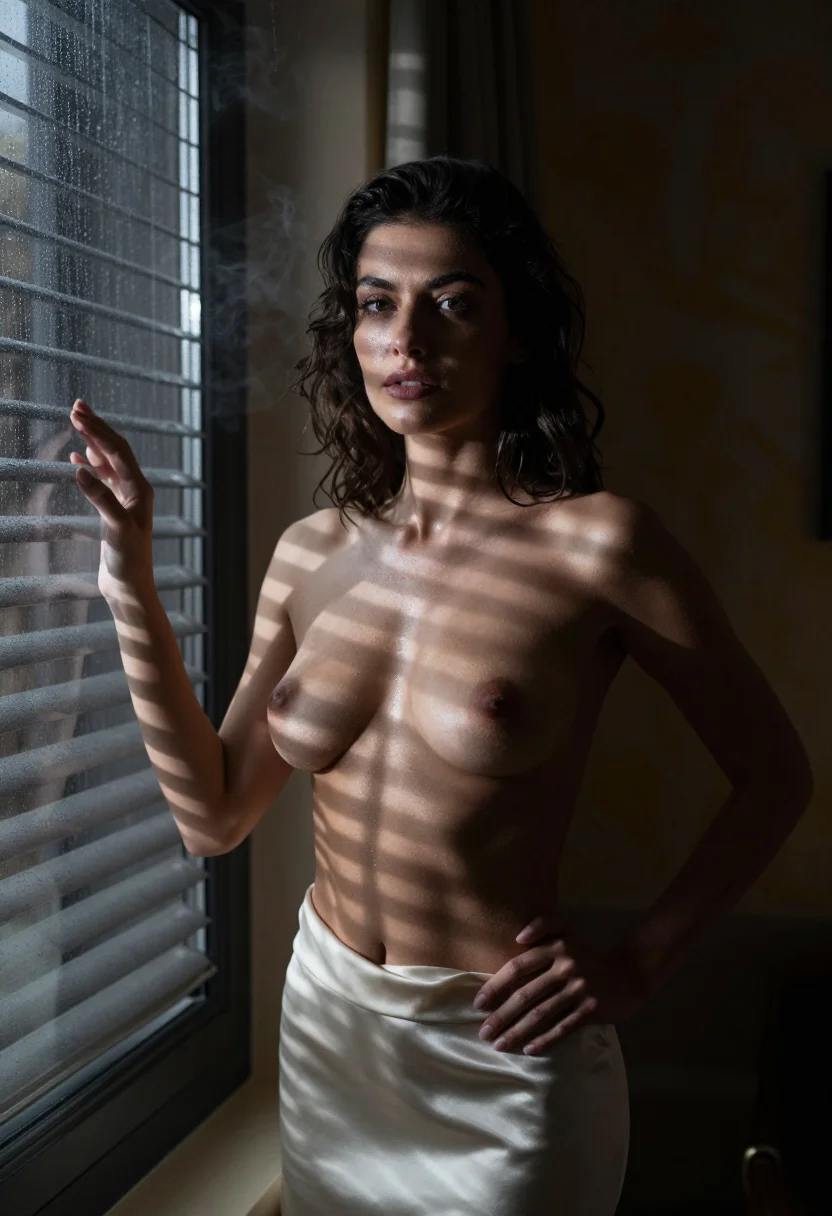
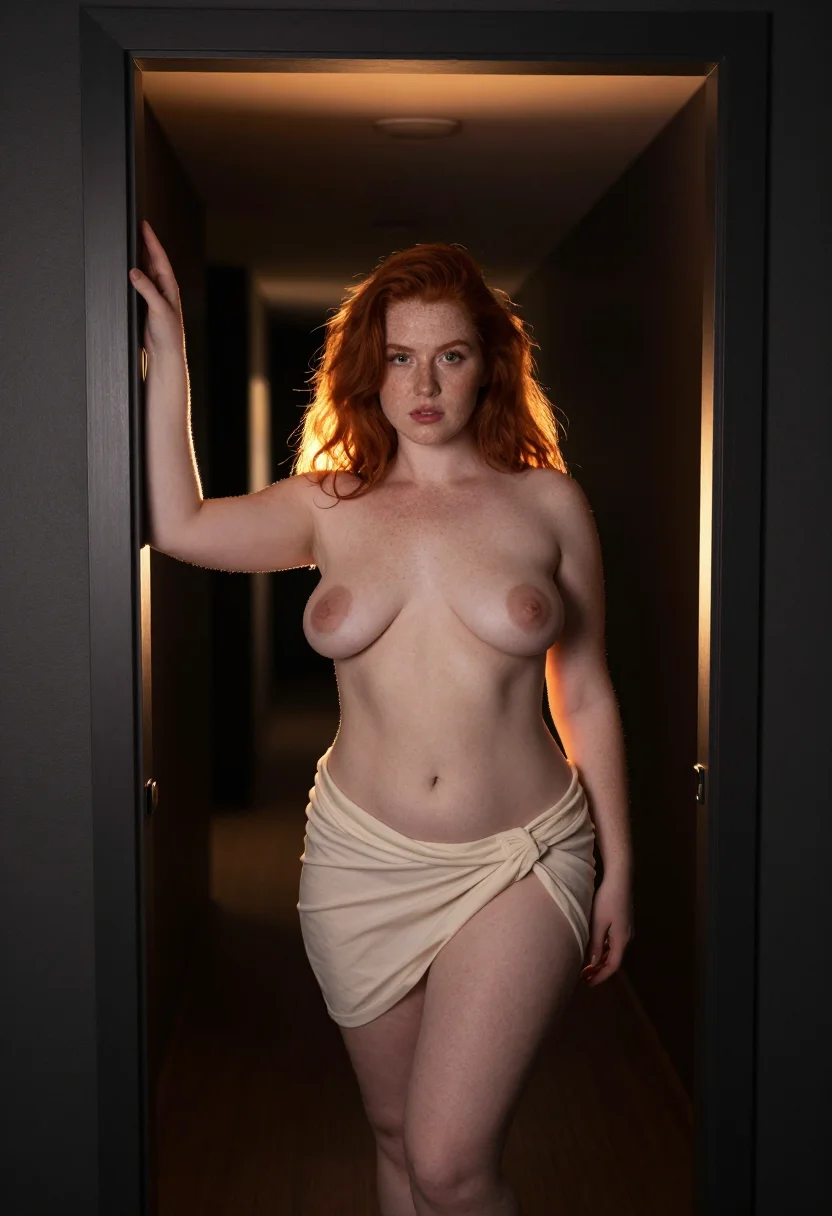
Film noir photography is a study in deliberate darkness — not darkness as absence, but as architectural element. This pack renders three of its canonical setups. Blind bars: a single hard key projected through venetian blinds, its shadow geometry falling across her face and shoulders as horizontal bars, the rest of the frame held at near-black. Vanity mirror: one undiffused lamp placed frontal-low, warm tungsten casting upward shadow, the mirror adding a second incident plane, low-key throughout. Doorway silhouette: hard backlight producing a rimlit silhouette, a soft frontal fill just sufficient to read the muse's face. Charcoal, silver-grey and tungsten-amber are the only colours.
The blind-bars frame opens in medias res — a woman already lit, the bars on her face suggesting surveillance and the world pressing in. The vanity mirror introduces interiority: the muse looking at herself, a second self visible in reflection, the lamp between them. The doorway silhouette closes the sequence on the threshold — half in, half out of the dark. Read in sequence, they trace a classic femme-fatale arc: watched, self-aware, poised to leave.
The muse is an AI invention, synthetic and fictional, designed into the composition from the first frame and purpose-built for the femme-fatale register.
The house casts a range of muses across the collection — European, East Asian, South Asian, Latina, Black, Celtic — because the noir femme-fatale archetype transcends any single type and the archive should reflect that. Every frame is photographic in rendering, not illustrated: the venetian-blind shadow geometry, the tungsten colour temperature and the silhouette edge are all built from photographic light principles.
Frequently asked questions
- What is in the AI Film Noir Photos pack?
- Nine frames of a 1940s femme-fatale muse across three noir settings: venetian-blind bars laid across a gown and face in deep low-key, a tungsten vanity mirror with a ghostly reflection in low-key warmth, and a backlit doorway silhouette with a soft frontal fill. Charcoal, silver-grey and tungsten-amber are the only colours. Three frames per setting, €9.99.
- Who is she? Is this a real person?
- She's an AI muse — generated, synthetic, fictional. Every frame is designed into the composition from the outset, part of the portrait rather than anything drawn from a real person. This is portrait photography of a woman who does not exist.
- Are these real photographs or AI-generated?
- AI-generated, photographic in intent. The venetian-blind shadow geometry, the tungsten colour temperature and the silhouette edge are rendered from photographic light principles, so the result reads as a 1940s noir studio session, not an illustration or an anime render.
- Can AI produce convincing film noir photography?
- Yes. The noir register is well-suited to AI generation because its defining features — hard sources, deep shadow, geometric light patterns — are expressible in precise prompt language. This pack was engineered around three canonical noir setups rather than a generic 'dark lighting' instruction, so the chiaroscuro reads as chiaroscuro across all nine frames.
- How is this different from the Pin-Up and Burlesque packs?
- Same vintage neighbourhood, three different decades and moods. Pin-Up is the cheerful 1950s retro register — a pink bedroom, a chrome diner booth, cherry-red lips in high-key colour. Burlesque and showgirl is the cabaret stage — corsetry, ostrich feathers, spotlit red velvet, theatrical. This pack is 1940s chiaroscuro: hard sources, deep shadow, a femme fatale in venetian-blind bars and tungsten, dark and literary rather than bright or feathered.
- How is this different from a typical AI image generator?
- Adjacent territory, different format. A typical generator is an interface where you steer one image at a time. This pack is a pre-engineered nine-frame portrait series built around a specific 1940s noir aesthetic — more portrait commission than chat interface — for a single price.
- Is there an age requirement, and is a real person depicted?
- Access requires age verification (18+). No real person is named, depicted or impersonated anywhere in this pack; every muse is AI-generated and synthetic.
- Who is in the photos?
- A muse you choose. 32 AI faces, none of them a real person.
Who Reaches for the Noir Register
- Anyone searching film noir photos, femme-fatale or chiaroscuro imagery who wants a curated noir series rather than one-off outputs
- Photography and cinematography students studying 1940s noir lighting — venetian-blind projection, tungsten setup and silhouette
- Noir fiction writers and screenwriters who need a consistent visual portrait of a fictional femme-fatale character
- Vintage glamour and noir enthusiasts who want composed, photographic-quality reference across three canonical setups
- Digital artists and retouchers who use noir photographic reference for lighting and shadow study
- Creatives building mood boards for period-accurate editorial shoots with strong chiaroscuro
- Adults who prefer the composed, literary register of noir over generic AI glamour imagery
About Ovid
Ovid is a house of pictures that were never taken. Most AI image tools ship one giant catalog of poses and aesthetics; the output looks like every other generated image on the internet. Ovid goes the other way. Each pack is a single editorial brief — light, styling, scene composed in the grammar of the great fashion editorials — hand-curated against real references and tested before it ships. Free preview before you pay. Packs are one-time. No template generator, no feed. A fashion house, not a catalog.