/fitting-room
Fitting Room Muse — Nine AI Photos
Make it with your museFitting Room Muse — Nine AI Photos
Open this world on the wall, and make it with your muse.
all 9 frames of her, in this world ↓
The Fitting Room Register: Curtain Gap, Triptych Mirror and a Dress on the Hook
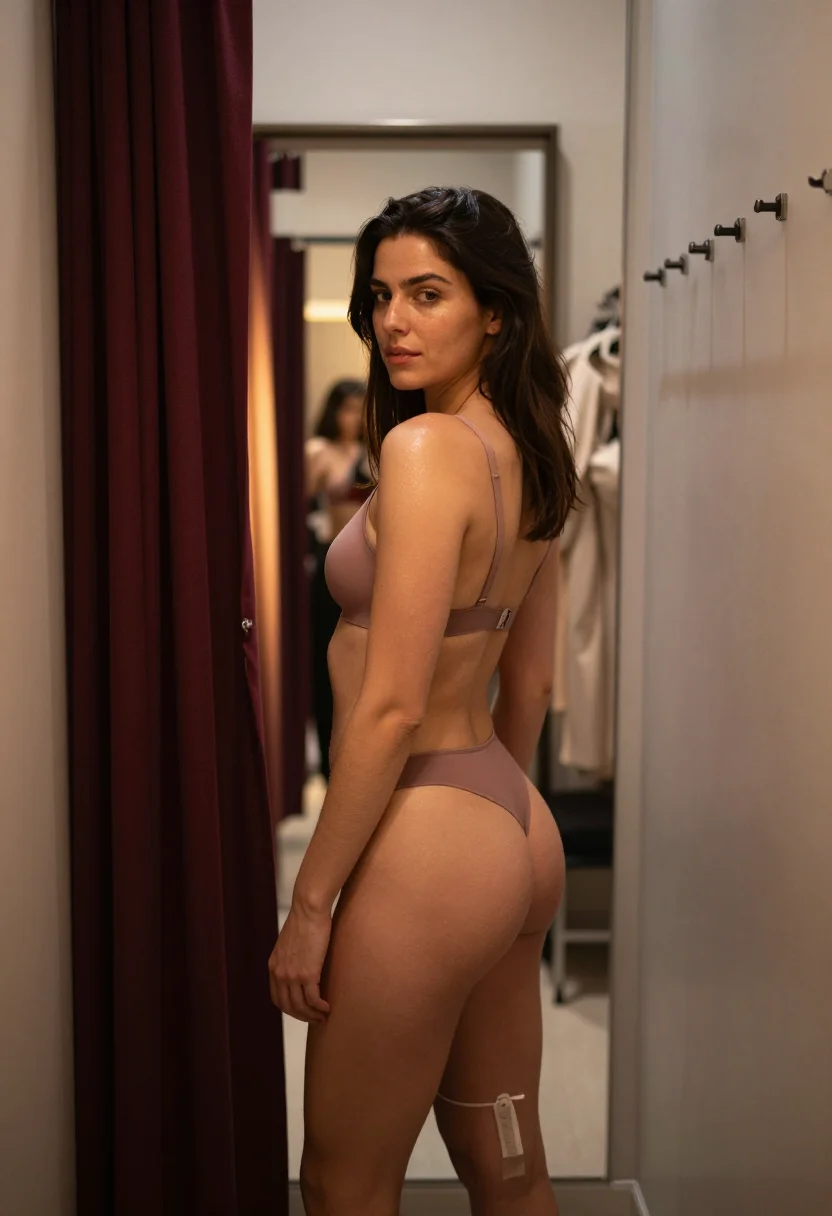
The fitting room is the one room in a shop built for trying clothes on in private, and that is the whole reason this pack is set there. The permission is already in the architecture — a curtain instead of a door, a mirror at arm's length, a garment that belongs to the shop until it has been paid for. Every frame sits on that beat: the look caught mid-decision, the new dress on its hook or half-zipped, its paper tags still dangling.
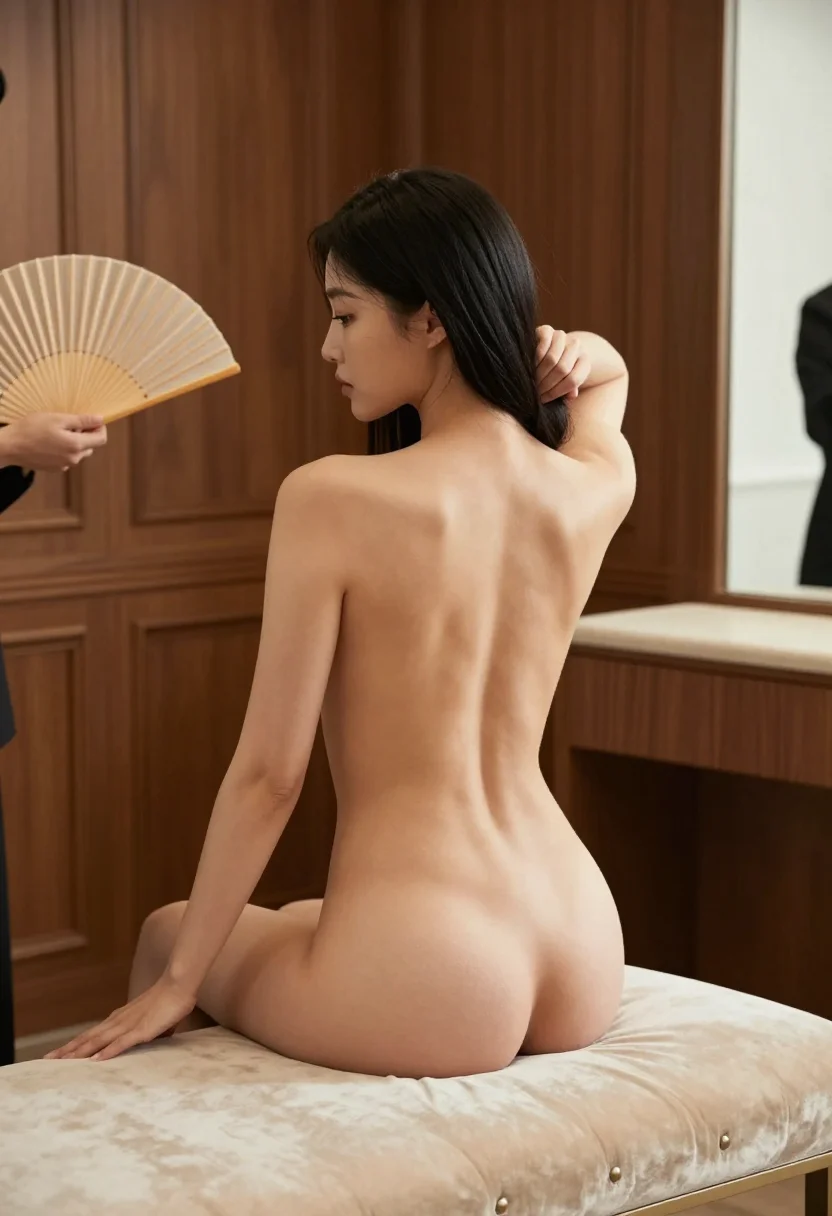
Three rooms carry the sequence and each brings its own light. The boutique cabin opens it warm and close, a broad amber wash leaking through the half-drawn curtain from camera-left while a weak cool overhead barely reaches the crown and the far half of the cabin falls to shadow; the mirrored back panel returns a softened second view and the hook rail above holds a row of unbought garments going out of focus. The department-store triptych mirror flips the light flat and bright — a cool even wash from directly overhead with almost no shadow direction, three hinged panels folded in so one look comes back front and both sides at once, denim on a carpeted plinth. The panelled salon closes the set in oyster silk under a soft warm afternoon window, walnut going quietly dark in the corners, a velvet bench and an attendant's forearm at the frame edge. One ritual, three lighting logics, one coherent shoot.
The muse is an AI invention, built for the fitting-room and try-on register from the ground up. The dress, the tags and the mirror are drafted into the composition from the first word of the prompt.
All nine frames are photographic in composition and AI-generated in execution: the gradual shadow edge under the jaw, the specular sitting on a brass clasp and a worn hook, the way a hinged mirror hands back a rear view of a stance shot from the front. Rendered from photographic principles, not drawn or animated. The house casts a range of muses across the register, so this is a look rather than one body type.
Frequently asked questions
- What is in the AI Fitting Room Photos pack?
- Nine frames across three try-on rooms. A narrow curtained boutique cabin where a new dress hangs from a hook with its paper tags still attached, and a rail of unbought stock sits above. A department-store triptych mirror whose three hinged panels are folded in, so one look comes back front and both sides in a single glance. A panelled luxury salon where an oyster silk slip dress rests on a velvet fitting bench. Three frames per room.
- Who is she? Is this a real person?
- She is an AI muse, invented for this pack — generated, synthetic, no one real. The dress, the curtain gap and the triptych mirror are drafted into the frame from the first word of the prompt; nothing behind her is a real person or a real shop.
- Are these real photographs or AI-generated?
- AI-generated. Composition, light behaviour and skin rendering follow photographic principles — a broad warm wash through a curtain gap catching the near shoulder with a gradual shadow edge, a flat cool retail overhead that kills shadow direction almost entirely, a small specular on a brass clasp. The result reads as a shoot in a shop, not an illustration.
- Is anyone else in the frame?
- Nobody is ever shown reacting. Other people exist only as depth: a figure cropped at the shoulders walking away down the hallway, a seated shape turned fully away over a phone, racks of folded stock going out of focus down a carpeted aisle. The single exception is the salon attendant, and only a forearm, a cuff and a fan of hangers enter at the frame edge — never a face, never a reaction. The register is the possibility of being seen, not a witness.
- Searches like "try on haul" and "boutique fitting room" brought me here. Is that what this is?
- Close enough to say yes. This is the try-on moment itself rather than a haul: the look is still being decided, the tags are still on, and nothing in the frame has been bought. For the swimwear version of the same ritual the Bikini Haul pack is the one to look at; for the same nerve taken outdoors, Street Flash.
- How is this different from the Elevator and Cafe Flash packs?
- The room, and what supplies the tension. All three sit in the same indoor register — a semi-private space someone could walk into — and they part company on the source of the tension. Elevator runs on a countdown: the doors will open. Cafe Flash runs on an audience two tables away and a coffee that has to be finished. The fitting room runs on the try-on itself — a shop's private room and a look being decided — which makes this the slowest and most deliberate of the three.
- Why does the light change so much between the three rooms?
- Because the source changes. The cabin is lit by a broad warm spill leaking through a half-drawn curtain from one side, so the far half of the room falls away into soft shadow. The triptych mirror bay is lit from directly overhead, cool and even across the whole bay, which flattens shadow direction and opens every dark tone — the honest look of retail lighting. The salon is a soft warm afternoon window from camera-right, with walnut panelling going quietly dark in the corners.
- How is this different from a typical AI image generator?
- Adjacent territory, different format. A typical generator is a chat or a per-prompt tool you steer frame by frame. This is a pre-engineered nine-frame series — one try-on ritual, three coordinated rooms, three lighting logics — delivered in a single purchase.
- Can I use the frames once unlocked?
- Personal and creative use. Not for commercial redistribution, not to present as a real person's photograph, not for use against any individual.
- Is there an age requirement, and is a real person depicted?
- Access requires confirmation of age (18+), and every frame is AI-generated. No real person is named, depicted or impersonated: the muse is synthetic, someone who does not exist.
- Who is in the photos?
- A muse you choose. 32 AI faces, none of them a real person.
Who This Pack Is For
- Adults searching fitting room photos or try on haul photoshoot who want one coherent nine-frame series rather than scattered one-off generations
- Anyone who came in on dressing room photoshoot or shopping day photoshoot and prefers a composed set built for the scene
- Photographers studying how a warm spill through a narrow gap behaves against a flat cool retail overhead
- Artists who need photographic reference for a hinged mirror returning a figure from behind and in front in the same frame
- Designers looking at how jersey, rigid denim and bias-cut silk hang on the body as a look is being chosen
- Writers and worldbuilders who need a consistent visual face for a fictional character in a retail setting
- Adults curious about AI fitting room photos at an accessible entry price
About Ovid
Ovid is a house of pictures that were never taken. Most AI image tools ship one giant catalog of poses and aesthetics; the output looks like every other generated image on the internet. Ovid goes the other way. Each pack is a single editorial brief — light, styling, scene composed in the grammar of the great fashion editorials — hand-curated against real references and tested before it ships. Free preview before you pay. Packs are one-time. No template generator, no feed. A fashion house, not a catalog.