/ghungroo
AI Ghungroo Dance Portrait
Make it with your museAI Ghungroo Dance Portrait
Open this world on the wall, and make it with your muse.
all 9 frames of her, in this world ↓
The Ghungroo Register
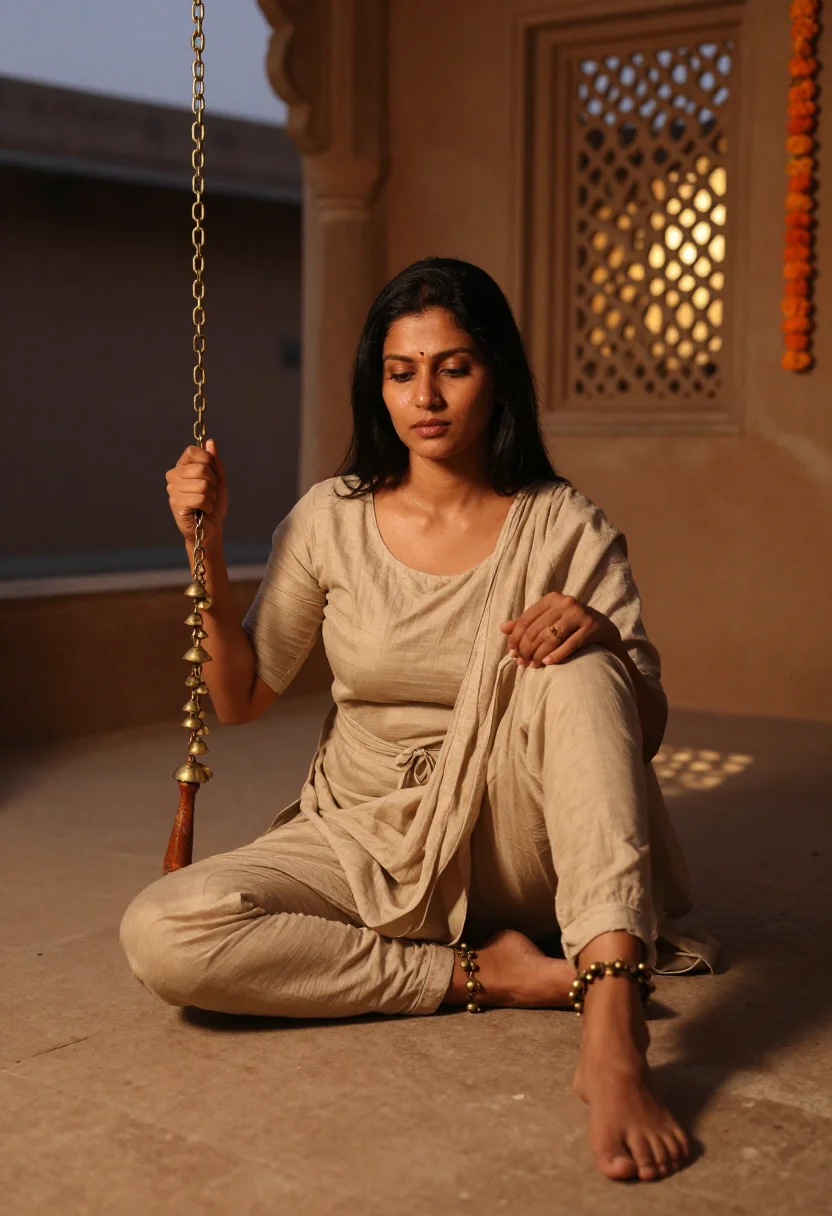
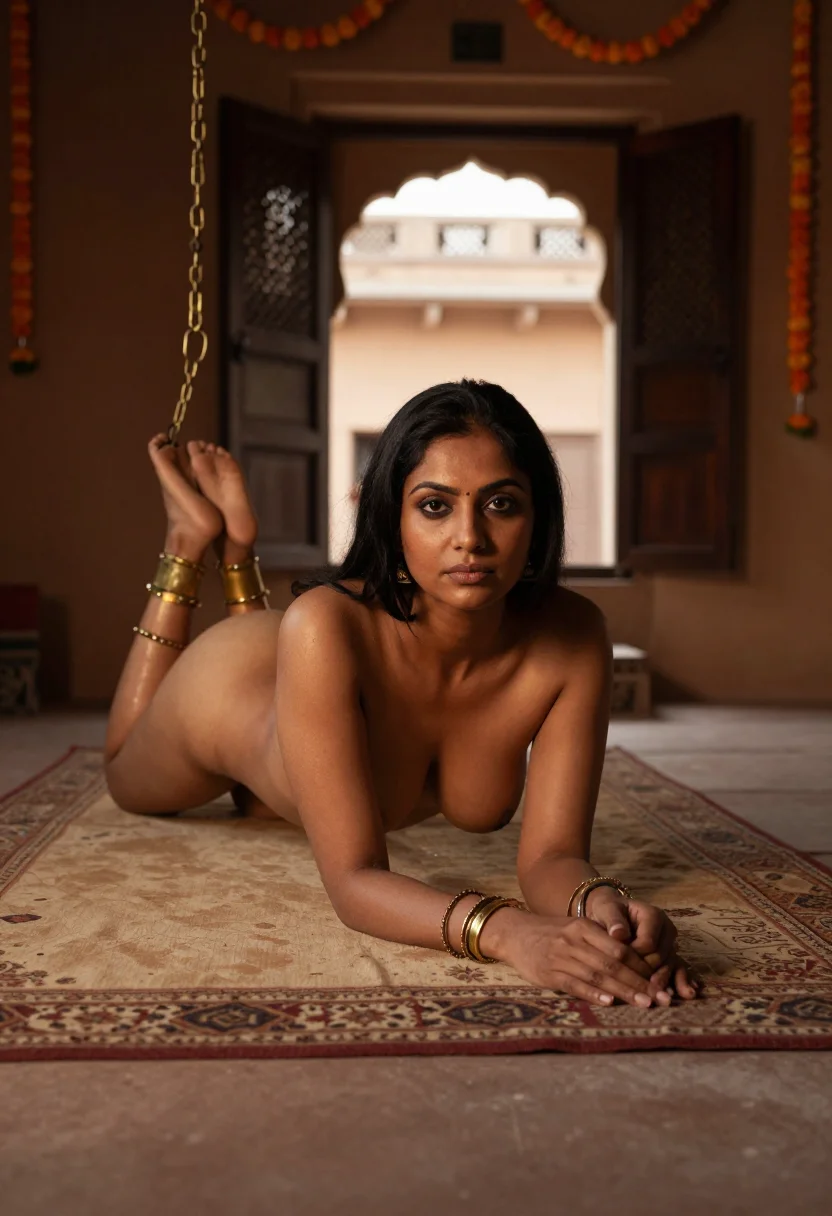
The pack is built on the dancer's ghungroo laced up the calves: a hundred brass bells per ankle, the sound as the thread that runs through every frame, and a haveli practice room at dusk. The register is classical and studious, the dance and the practice the subject.
Technically this means the bells' sound is rendered as motion and stillness — mid-blur at a stamped beat, or crossed silent at rest — under a sandstone, brass and marigold-light palette held consistent frame to frame.
The renders are photographic, not illustrated — real motion-blur on moving bells, real brass and sandstone warmth, the kind of dusk light a real haveli practice room would hold. Nothing here is taken from an existing photograph; every frame is composed from a written brief, first pixel forward.
Frequently asked questions
- What's in the AI Ghungroo Dance Portrait pack?
- Nine frames tracking a dancer's ghungroo through a full practice session. Three seated on the practice-room floor in a simple angarkha, winding the long bell-strands from ankle to mid-calf, each turn tested with a flex of the foot. Three mid-practice with the angarkha loose on one shoulder and the dupatta set aside, bells in motion at a stamped beat. Three kneeling in the last window light, the angarkha kept on, ankles crossed so the bells rest silent.
- Are these real photographs or AI-generated?
- AI-generated, built on photographic principles. Real haveli dusk palette — sandstone, brass, marigold light — real motion-blur on bells in mid-ring, the kind of detail a real practice-room camera would catch. Never drawn, never animated.
- Is this a real photo altered, or something else? What about age?
- Nothing is altered from an existing image. Each frame is written first — the room, the bells, the light — then composed from the first pixel forward; the muse is not a real person. Access requires confirming you are 18 or over.
- How does the session move across the nine frames?
- It follows the practice itself: winding the bells in the angarkha, mid-practice with the bells in motion, then kneeling with the bells at rest. The angarkha stays on in every frame. The bells' own state — mid-ring or silent — is described in each one.
- What's the wardrobe and setting?
- A simple angarkha, a dupatta, bangles, and a hundred brass ghungroo bells per ankle — a haveli practice room at dusk, sandstone and marigold light.
- Do I need to upload a selfie?
- It's optional. One clear front-facing photo casts the muse in your likeness across all nine frames; skip it and the house casts its own. The selfie steers the face — it is never the image being changed.
- What makes this set different from a single image?
- One practice room, one session — nine frames delivered whole for one payment, built to read as one dancer's evening.
- Can I use the frames once unlocked?
- Personal and creative use. Not for commercial redistribution, not to present as a real person's photograph, and not for use against any individual.
- Who is in the photos?
- A muse you choose. 32 AI faces, none of them a real person.
Who Reaches for the Ghungroo Register
- People searching for ankle bells or ghungroo imagery who want the graceful haveli practice-room register
- Photographers studying how motion-blur and stillness read across bells at a stamped beat
- Writers and worldbuilders who need one consistent dancer character across a single practice-room setting
- Anyone building a haveli or Indian-dance moodboard that has to hold one grade across nine images
- Dance and costume people looking at authentic angarkha and ghungroo reference
- Collage artists who need photographic-quality dusk-light material rather than studio glamour
- Adults curious about the ghungroo register of AI photography at an accessible entry price
About Ovid
Ovid is a house of pictures that were never taken. Most AI image tools ship one giant catalog of poses and aesthetics; the output looks like every other generated image on the internet. Ovid goes the other way. Each pack is a single editorial brief — light, styling, scene composed in the grammar of the great fashion editorials — hand-curated against real references and tested before it ships. Free preview before you pay. Packs are one-time. No template generator, no feed. A fashion house, not a catalog.