/muertos-street · Editorial
The AI Day of the Dead Nudes — Catrina Body Paint by Candlelight
More like this
135 packs · one muse wears them all →
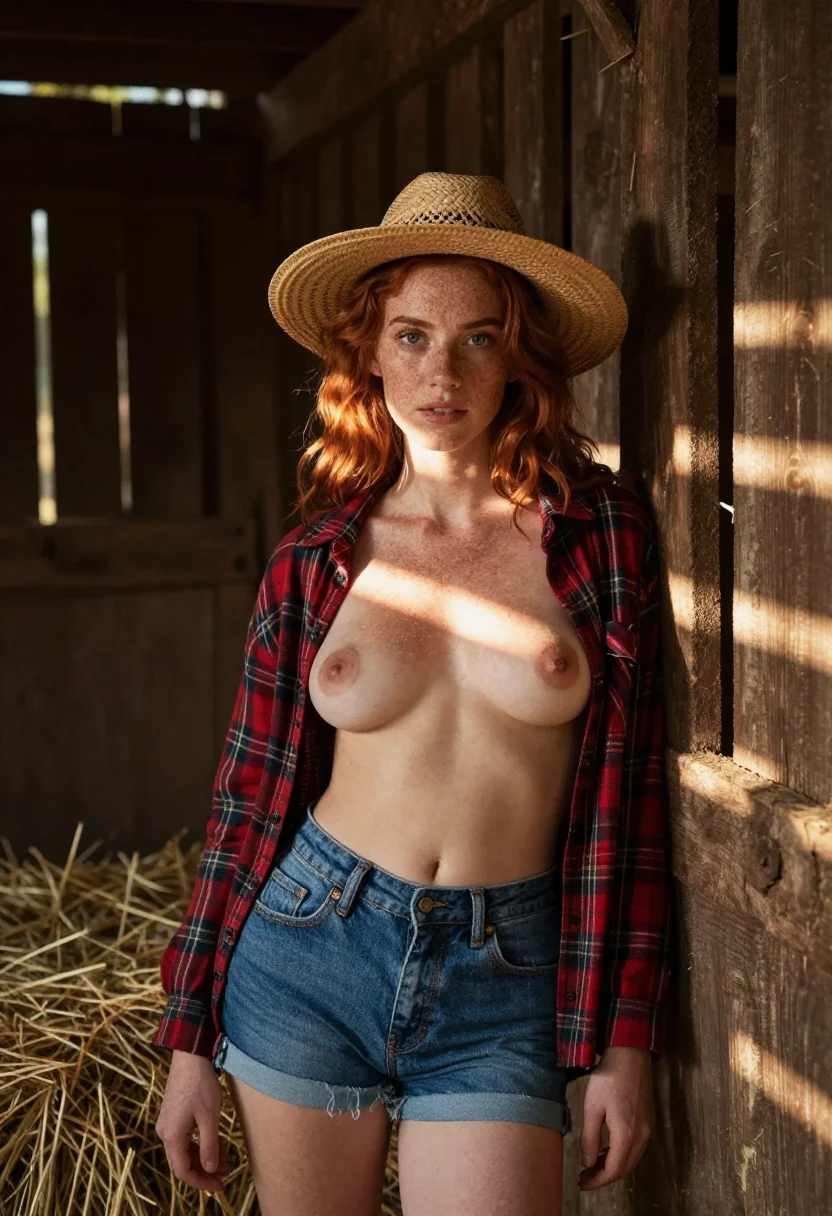
all 9 frames — cast from one selfie ↓
How it works
Three steps. Upload, preview, deliver.
1
Choose the pack
Pick the register you want the house to shoot in.
2
Preview free
See one frame free before you pay — the house shows its hand first.
3
Receive nine
Unlock the full set: nine composed frames, delivered instantly.
The Catrina Register: The Paint Is the Wardrobe
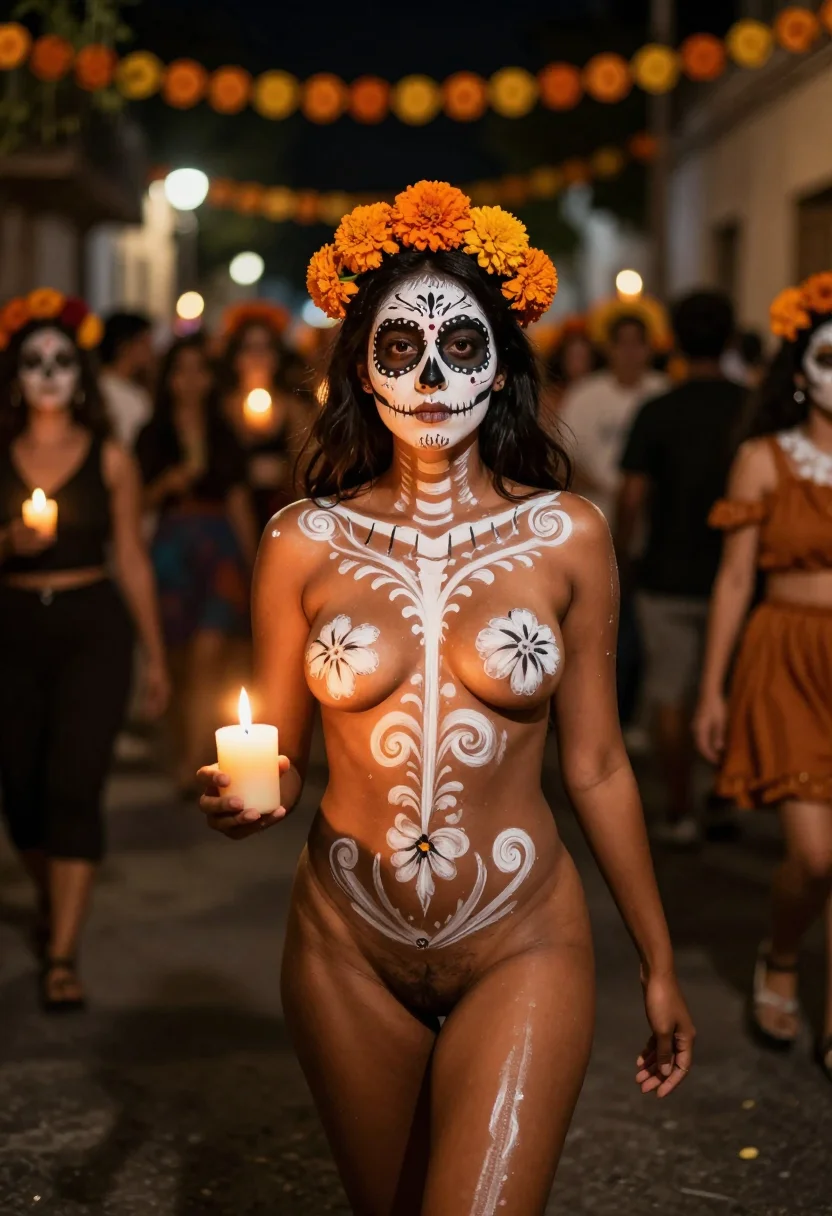
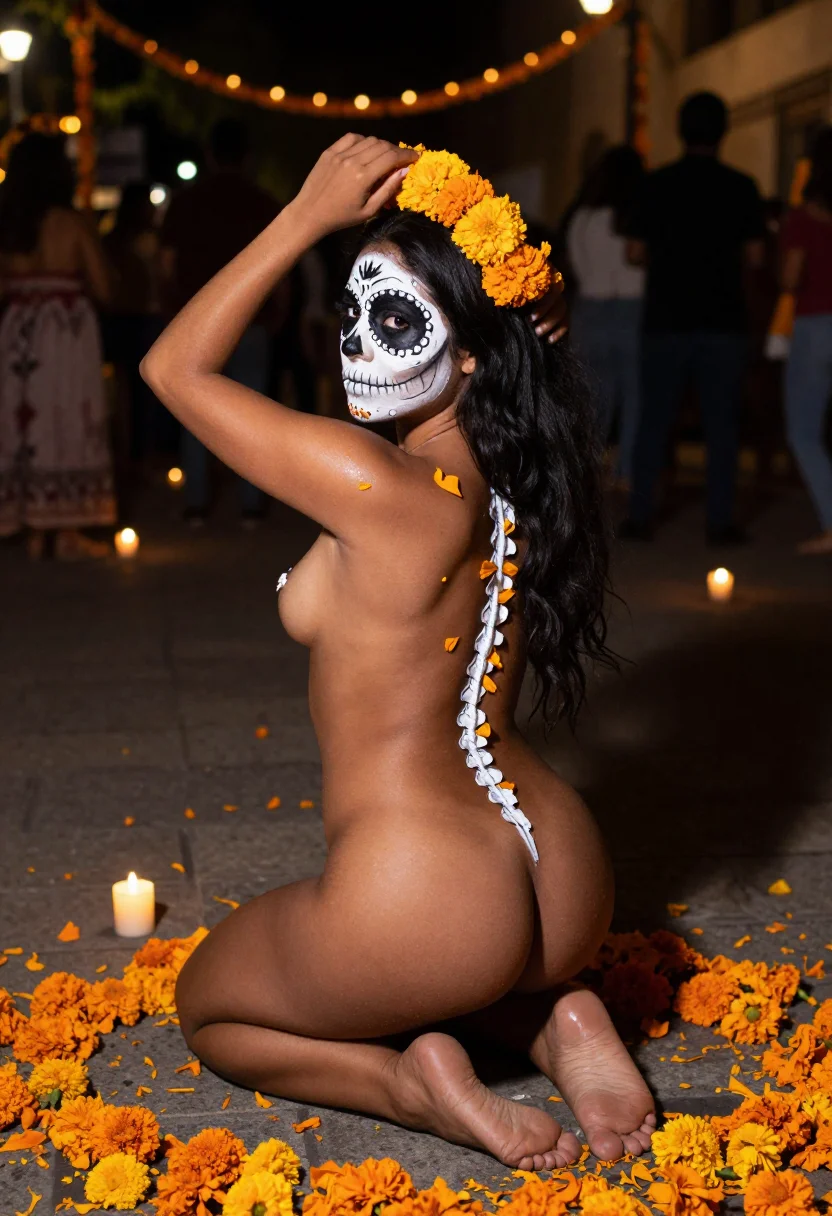
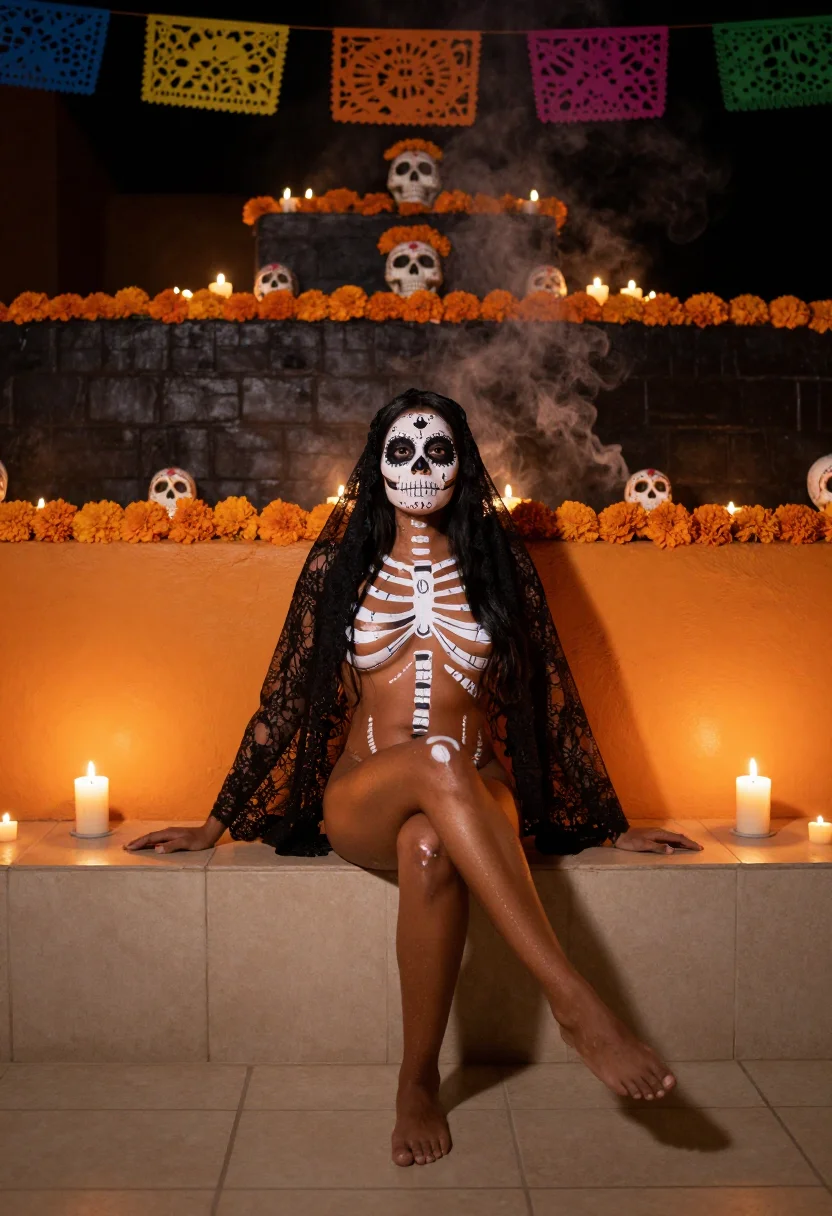
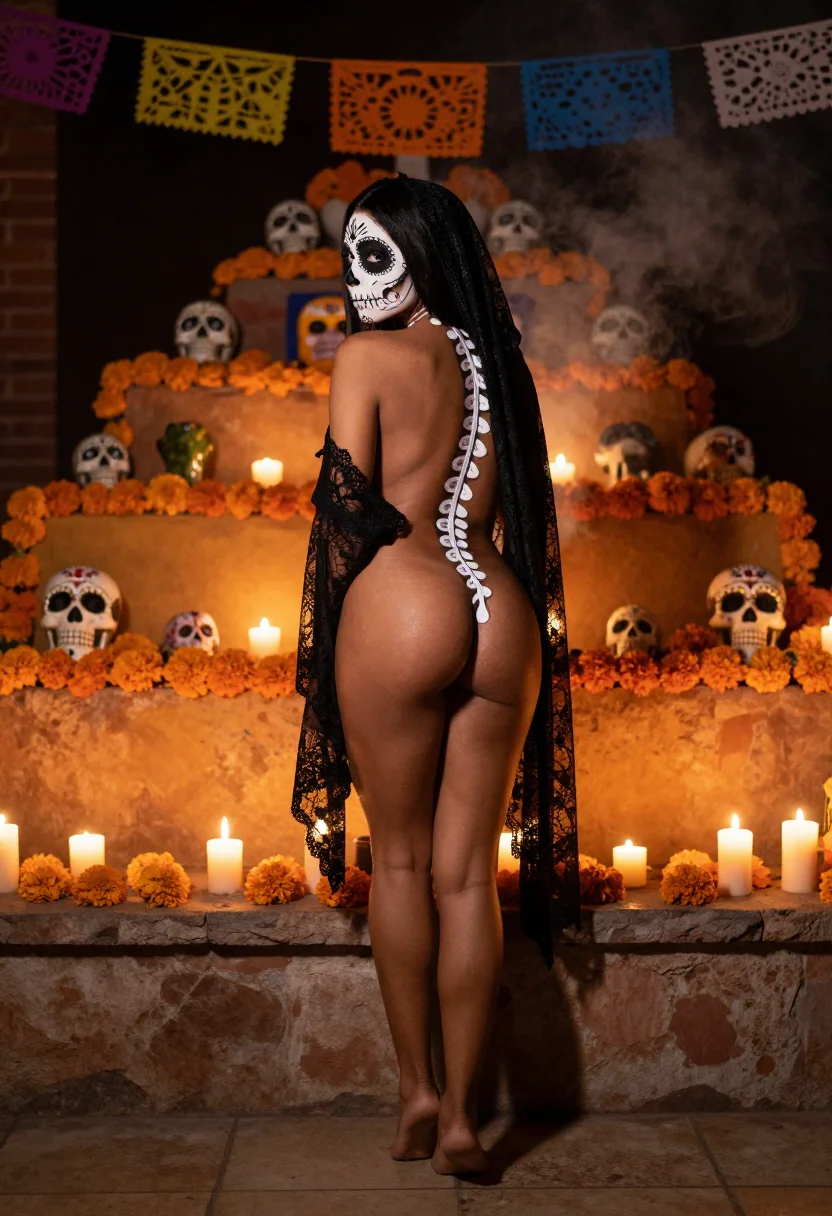
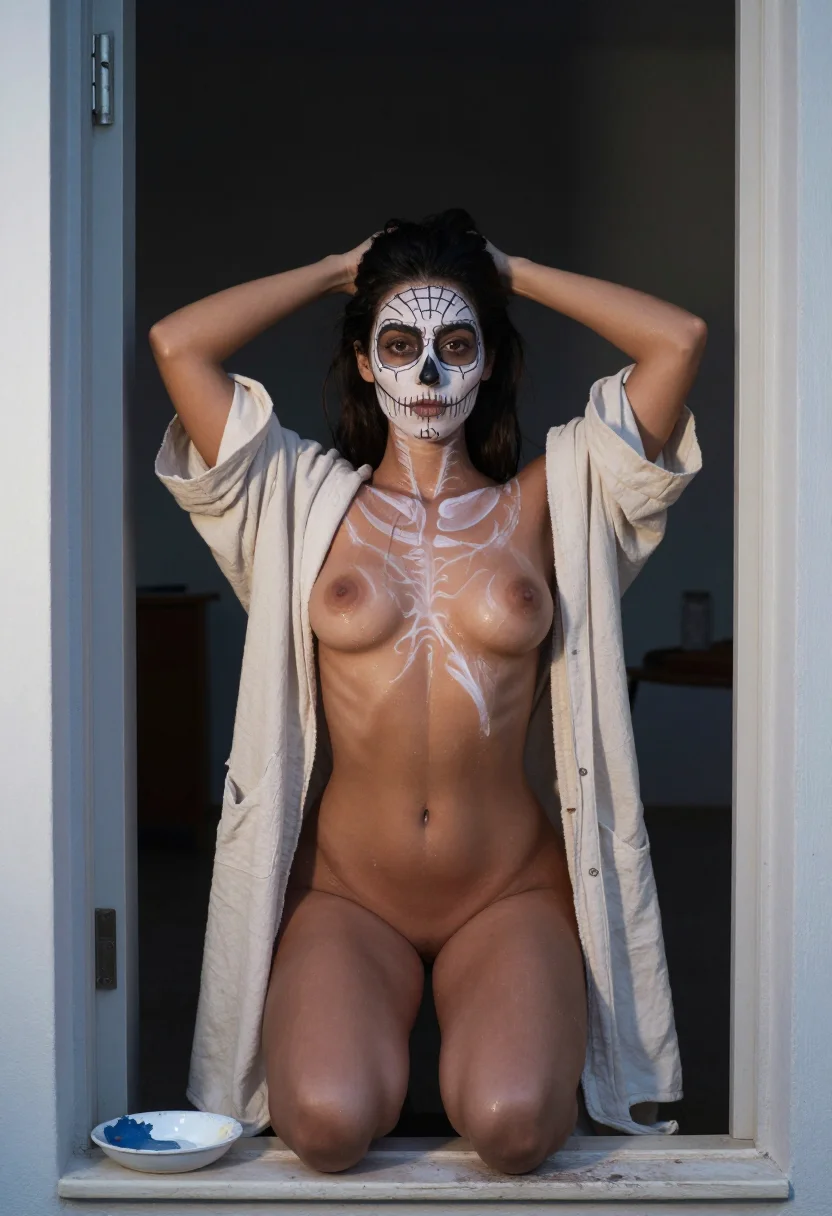
La Calavera Catrina came out of a printing press before she came out of a paint tin — Posada's etched skeleton in her flowered hat, then a face painted every year for Día de los Muertos, marigold and candle and cut paper around her. This pack takes her linework as clothing. There is almost no garment in the nine frames: a marigold crown, a black lace mantilla, a thin cotton robe worn off the shoulders, and otherwise white-and-black calavera line running the sternum, the ribs and the spine. What searchers call sugar skull body paint is that line drawn open, and drawn open is the point: it leaves each eye and the mouth clear, so the face stays a face.
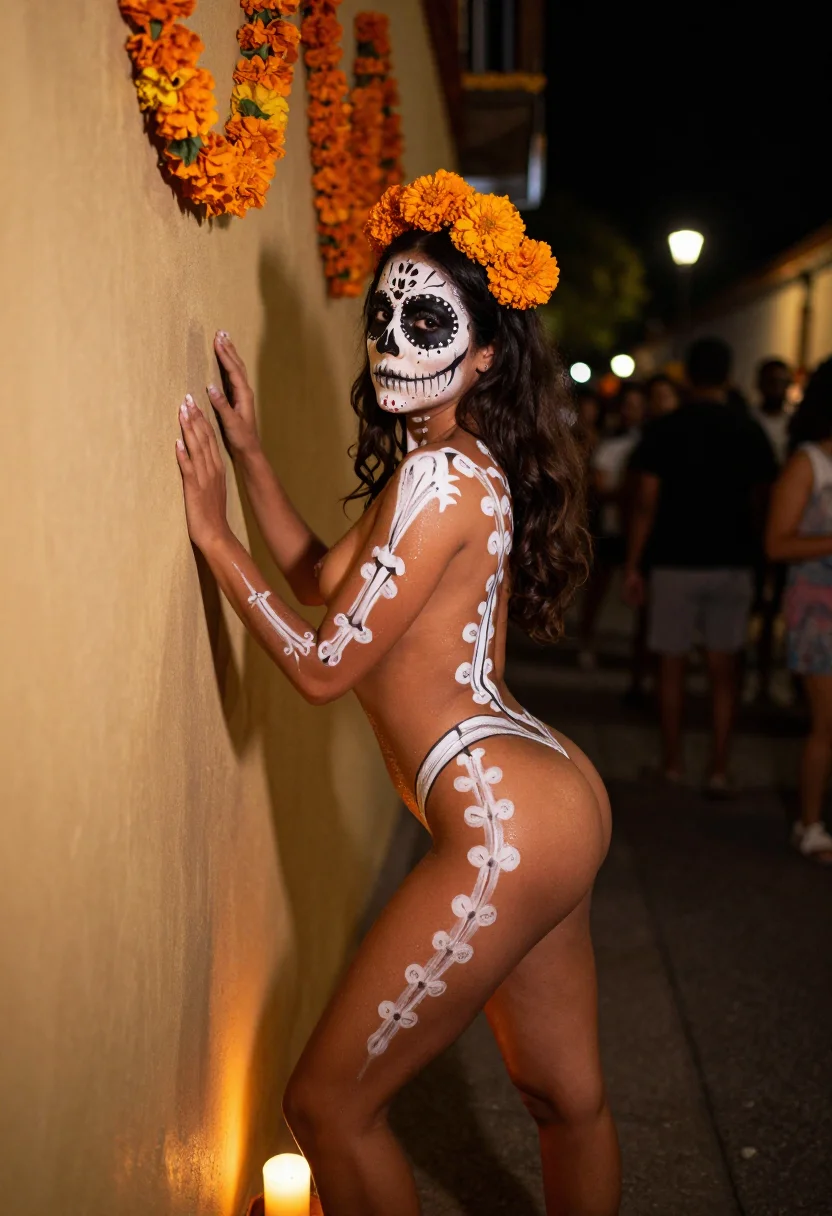
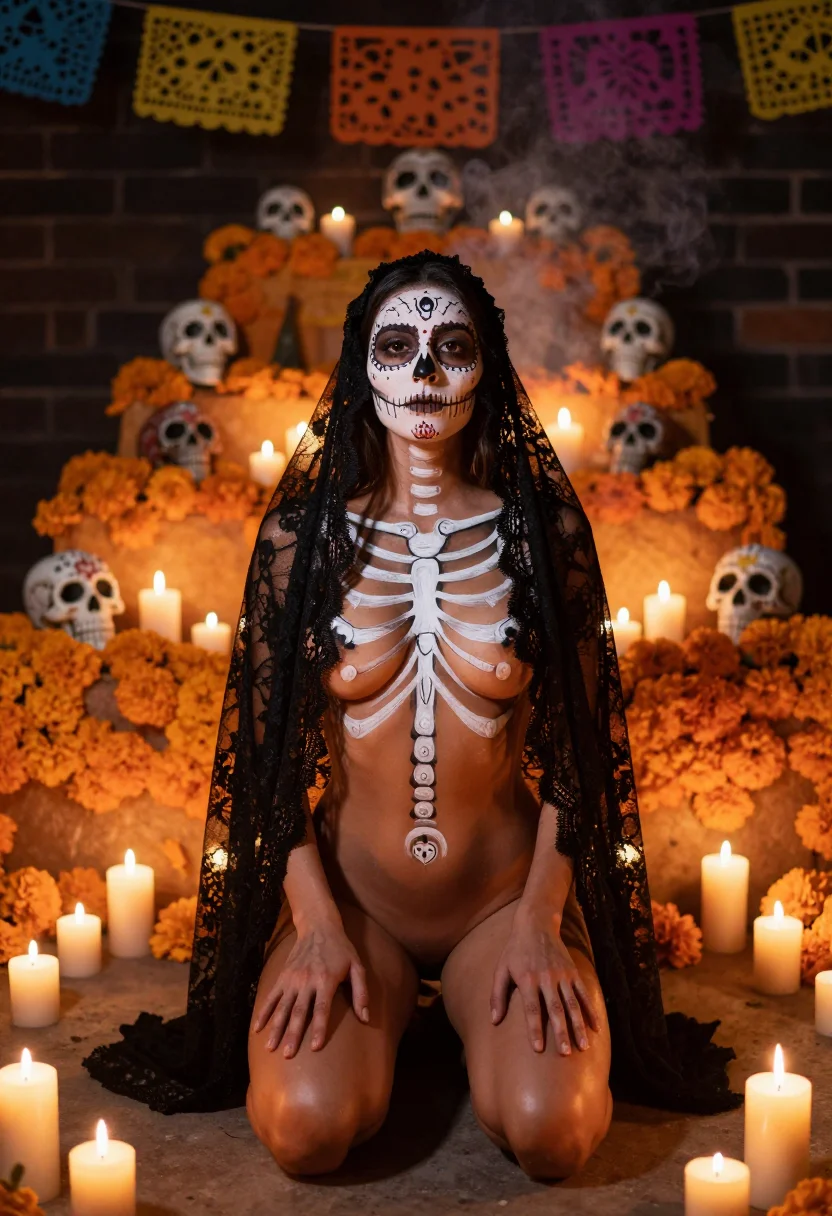
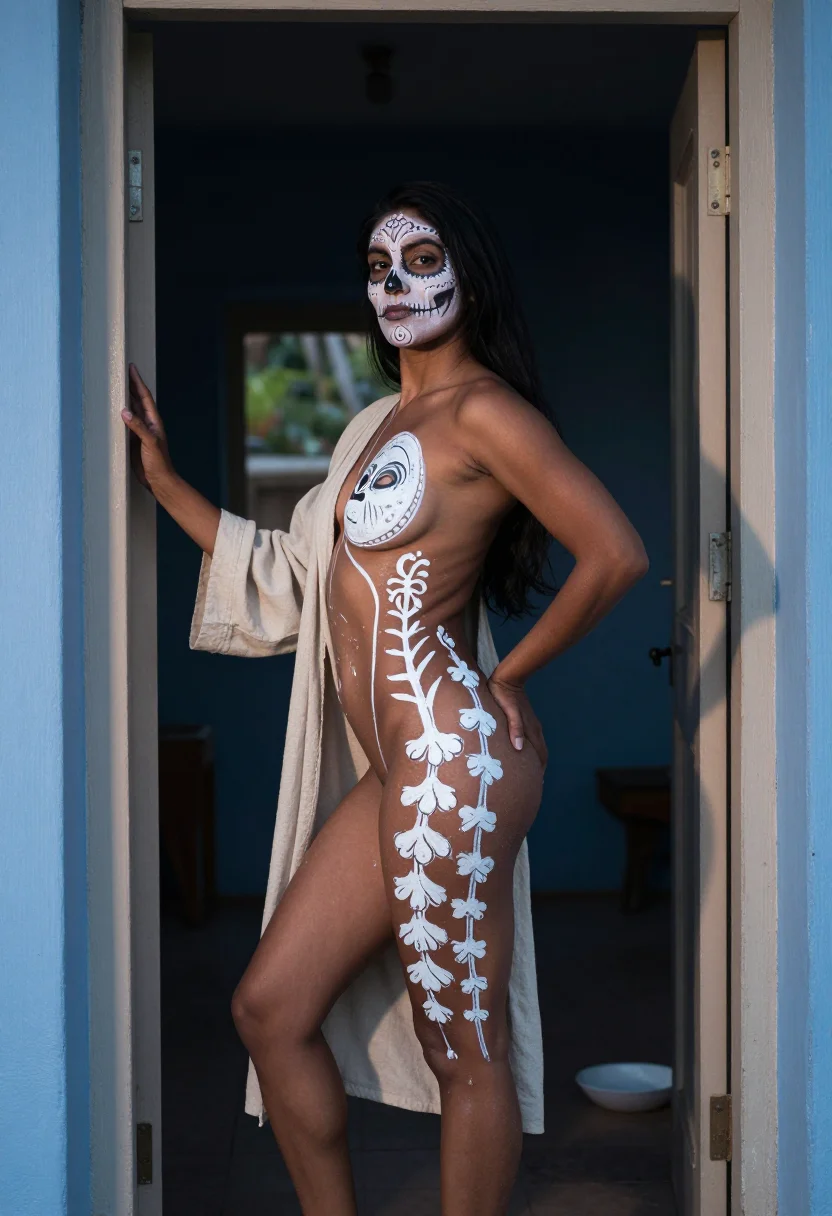
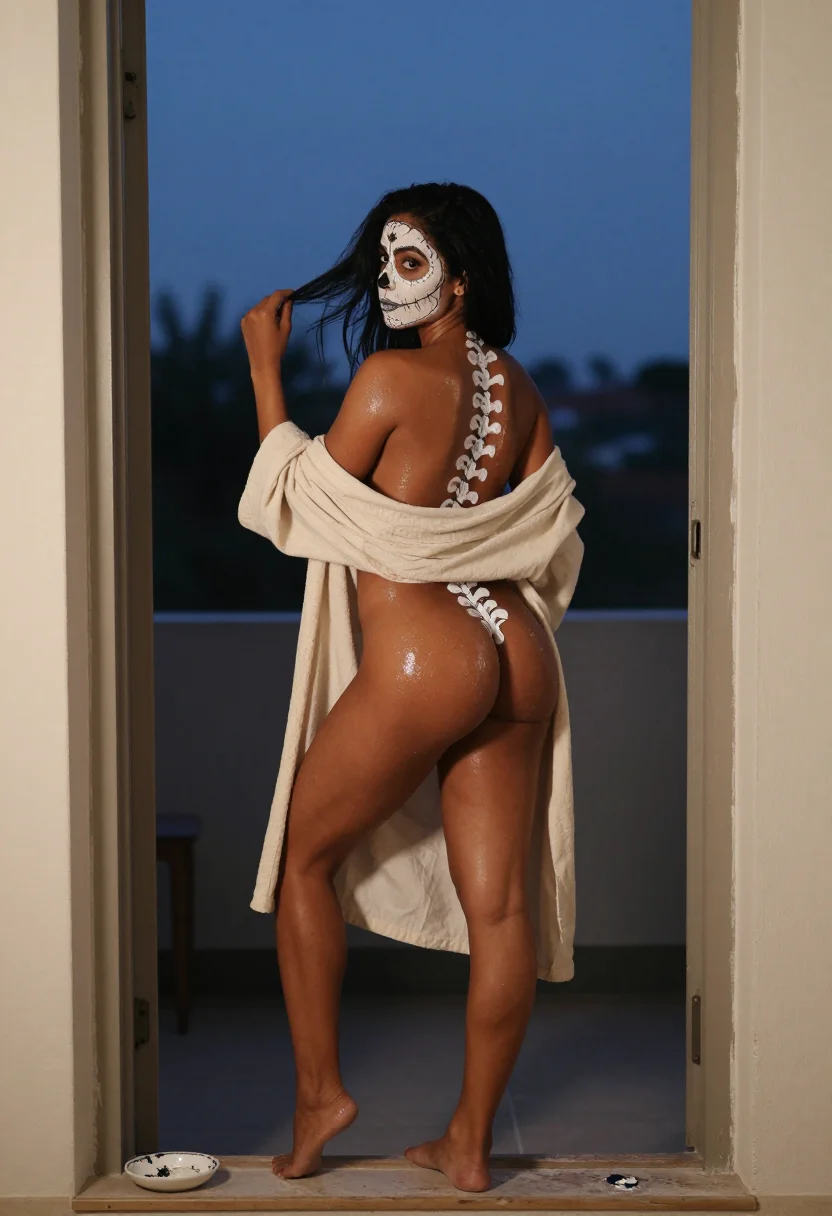
Three settings carry one night, and each lights differently. The street procession comes first, the muse walking toward the lens with a candle low at the waist — a small, near, hard flame that keeps the shadow edge crisp on the painted front while the crowd behind dissolves into near black between drifting points of light. The ofrenda wall is the warm, soft middle: candles massed just off frame, tiers of marigolds and sugar skulls, copal smoke drifting over cut papel picado, a scalloped black lace mantilla fallen open from throat to hip. The blue-hour doorway is the cold third and the most unusual, because it shoots the paint going on rather than finished: cool daylight from one side, the pattern trailing off unpainted and still wet at the hip, the brush hand out of frame.
The Day of the Dead deepfake and body paint deepnude searches end here — composed from scratch, not stripped from anyone's photo. Nothing is removed from an existing image: the paint, the light and the nudity are designed into the frame from the first pixel.
The palette is fixed and narrow — marigold orange, candle gold, bone white, black lace, blue slate in the doorway — and the house casts a range of muses inside it, each in its own relationship to the small hard flame, the massed warm candles and the cold doorway light. Every frame is photographic in rendering rather than illustrated: the specular along a painted collarbone, the row of catchlights from ranked candles, the wet sheen on unfinished linework are rendered from photographic principles, not drawn. The linework is the only painted thing in the picture.
Frequently asked questions
- What is in the AI Day of the Dead Nudes pack?
- Nine frames across three settings on one night. Three marigold crown nudes walking a candlelit street procession, painted sternum and flank, a candle carried low. Three lace mantilla nudes kneeling and reclining at an ofrenda wall banked with marigolds, sugar skulls and copal smoke. Three in a blue-hour doorway with a thin cotton robe off the shoulders and the linework still half-finished and wet. €4.99.
- What is a Catrina, and what does this pack borrow from it?
- La Calavera Catrina is a figure from Mexican printmaking — an elegant skeleton etched by José Guadalupe Posada in the 1910s, later carried into the imagery of Día de los Muertos and painted onto faces every year. What this pack borrows is the visual grammar: the fine white-and-black calavera linework, the marigold, the candlelight, the papel picado and the black lace. It is a body paint photoshoot in that register, not a record of anyone's observance and not a costume-horror set.
- Is this a nudify or undress app? Can it strip a real photo?
- No. There is no undress function and no real photograph is processed. The Day of the Dead and body paint searches end here running the other way: the paint and the nudity are composed into the frame from the first pixel, not removed from an existing image.
- Does the paint cover the face?
- Not the way a mask would. The Catrina work is open linework — scrolled vine, petal and vertebrae patterns climbing the sternum, the ribs and the spine, with the face traced in the same open line so both eyes and the mouth stay clear. The face reads as a face wearing paint, which is also why a cast selfie survives the register.
- Why does the light look so different between the three settings?
- Three different sources. In the procession a single candle sits low at the waist — small, near and hard, so the shadow edge along the painted front stays crisp and the crowd behind falls to near black between drifting points of flame. At the ofrenda the candles are massed and just off frame: broad and warm, wrapping the torso with a soft gradual falloff and setting a row of small catchlights in each eye. The doorway is the cold one — blue-hour daylight, broad and soft from camera-left, against deep interior shade.
- Are these real photographs or AI-generated?
- AI-generated. Composition, light and skin follow photographic principles — warm specular along a collarbone, candle flame under the jaw, copal smoke crossing a lit wall — so a candlelit nude photoshoot reads as photography rather than illustration. The linework is painted; the picture is not.
- How is this different from the Body Paint and Bruja packs?
- Register and room. Body Paint is studio work — colour, gradient, seamless backdrop, the paint as pure design. Bruja is a folk-magic interior: candles, herbs, close walls. This one is outside on a night street and at an ofrenda wall, and the paint has a specific vocabulary — calavera linework, marigold, black lace — rather than free-form colour.
- Do I need to upload a selfie?
- It is optional. One selfie casts the muse across all nine frames; without it the pack renders its own face. Either way nothing is undressed — an upload informs the face direction only.
- Is this a Candy AI or Promptchan alternative?
- Adjacent territory, different format. Candy AI runs as a chatbot and Promptchan as a per-prompt generator you steer yourself. This pack is a pre-engineered nine-frame series — one painted register, three coordinated settings, a distinct lighting logic each — for a single price.
- Can I use the frames once unlocked?
- Personal and creative use. Not for commercial redistribution, not to present as a real person's photograph, not for use against any individual.
- Is this explicit? Is there an age requirement, and is a real person depicted?
- Yes — explicit adult nudity in a painted festival register. Access requires confirmation of age (18+). No real person is depicted, named or impersonated: every muse is AI-generated and an adult. The one exception is you — if you upload a selfie you are choosing to cast your own face into composed frames, and the muse underneath it is synthetic.
Who Reaches for the Catrina Register
- Anyone searching Day of the Dead nudes, Catrina makeup nudes or body paint festival nudes who wants the register as a composed nine-frame series rather than one-off prompt results
- People who want a painted body photoshoot where the paint is a drawn vocabulary — calavera line, vine, petal, vertebrae — rather than free-form colour
- Photographers studying a single small candle flame against massed warm candlelight and cold blue-hour daylight on the same subject
- Body painters and makeup artists who want photographic reference for open linework across the sternum, ribs and spine
- Artists working in marigold-and-candlelight palettes at photographic quality
- Writers and worldbuilders building a consistent visual face for a character drawn from festival imagery
- Adults curious about AI nude photography at an accessible entry price
About Ovid
Ovid is a house of pictures that were never taken. Most AI image tools ship one giant catalog of poses and aesthetics; the output looks like every other generated image on the internet. Ovid goes the other way. Each pack is a single editorial brief — light, styling, scene composed in the grammar of the great fashion editorials — hand-curated against real references and tested before it ships. Free preview before you pay. Packs are one-time. No template generator, no feed. A fashion house, not a catalog.
All images are AI-generated. By using this service, you confirm you are 18+. Full Terms