/retro-train · Editorial
The AI Vintage Train Nudes — 1920s Sleeper, Silk and Pearls
More like this
135 packs · one muse wears them all →
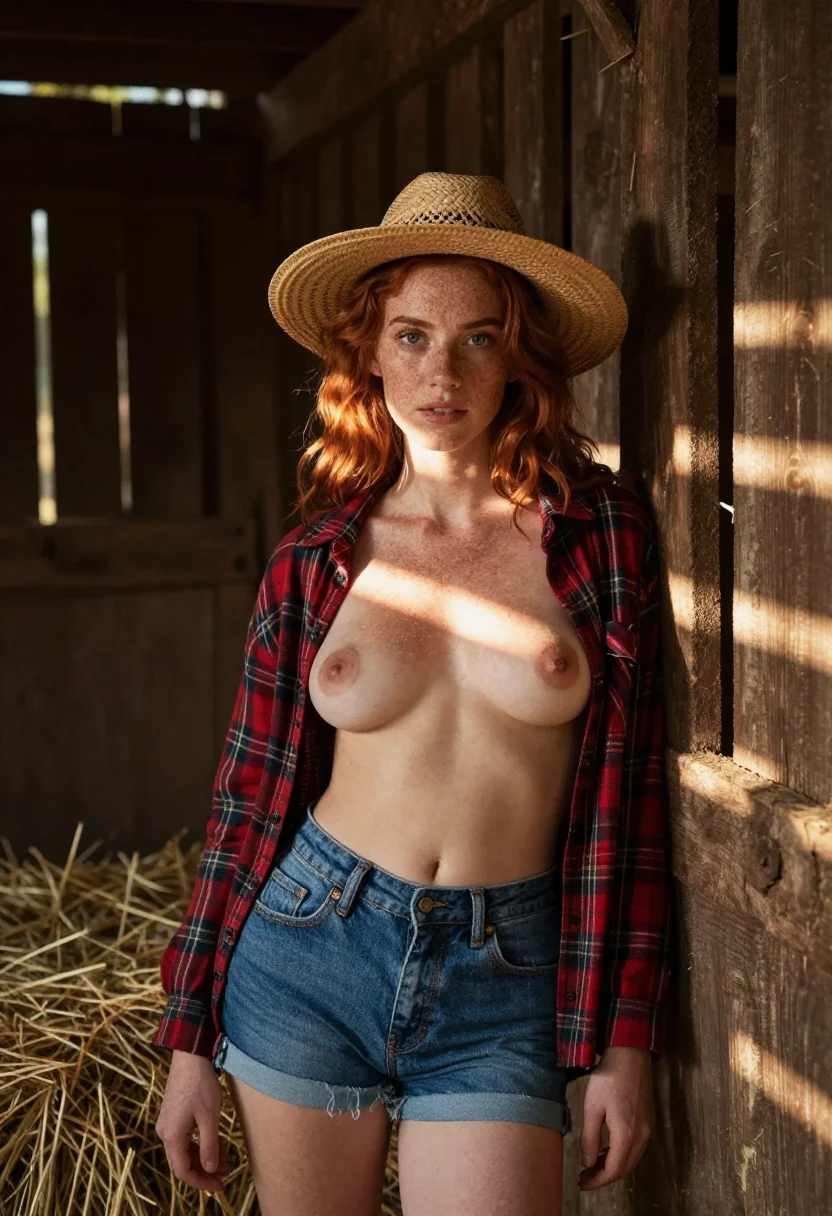
all 9 frames — cast from one selfie ↓
How it works
Three steps. Upload, preview, deliver.
1
Choose the pack
Pick the register you want the house to shoot in.
2
Preview free
See one frame free before you pay — the house shows its hand first.
3
Receive nine
Unlock the full set: nine composed frames, delivered instantly.
The Retro Train Register: Bias-Cut Silk at Seventy Miles an Hour
A first-class compartment is the most private room the 1920s built, and it was moving. That is the whole premise of this pack. The decade had just thrown out the century's underwear architecture — whalebone, hooks, hoops — and replaced it with the bias cut: silk cut on the diagonal that follows the body instead of shaping it, held up by two narrow straps and gravity. A garment that stays on by consent slips off by nothing at all. Put that dress in a locked walnut box travelling through the dark at speed, hang a rope of pearls on it, and the register writes itself.
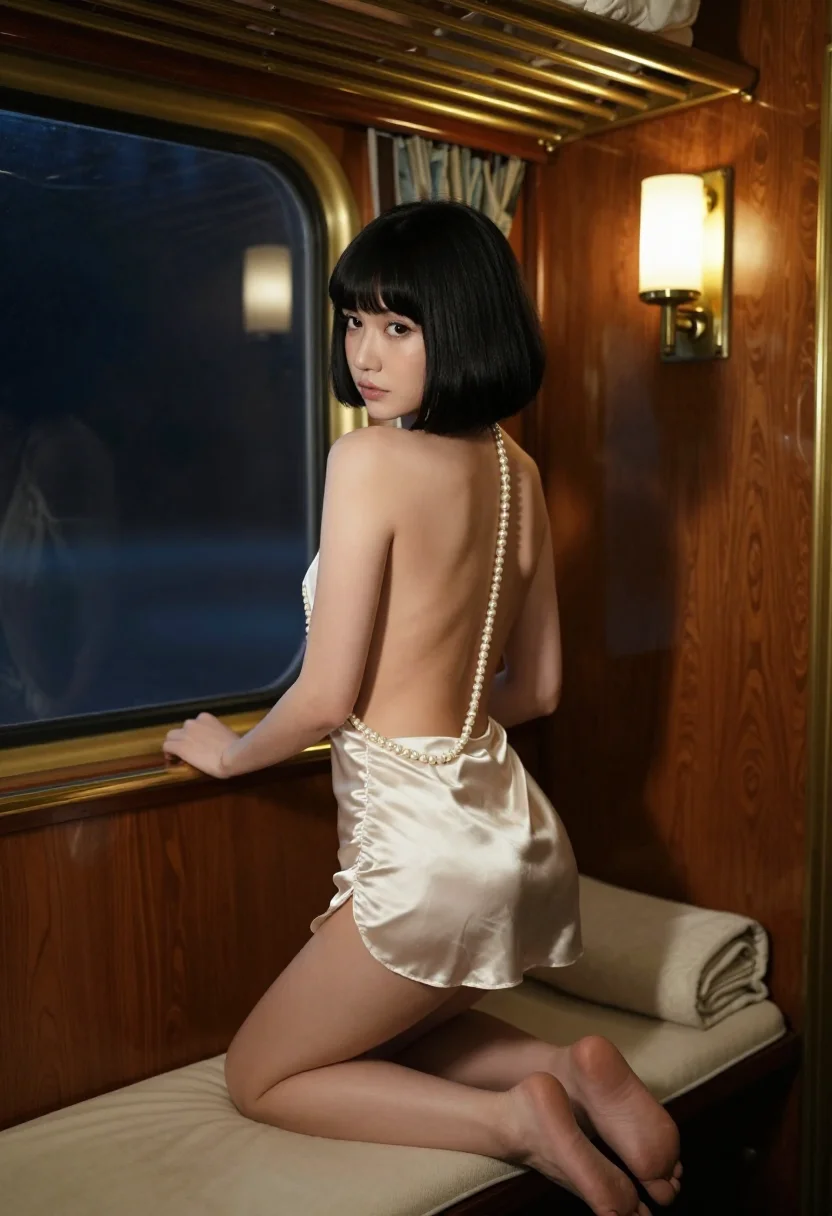
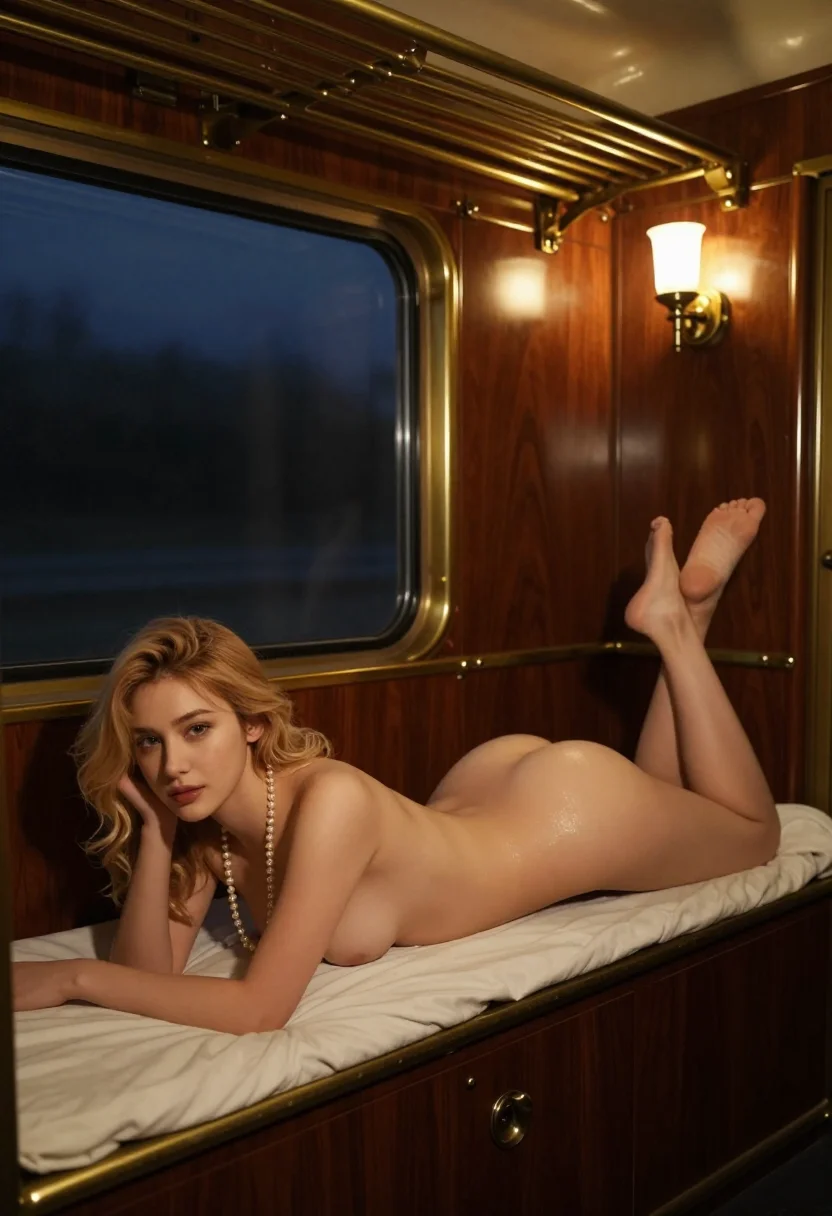
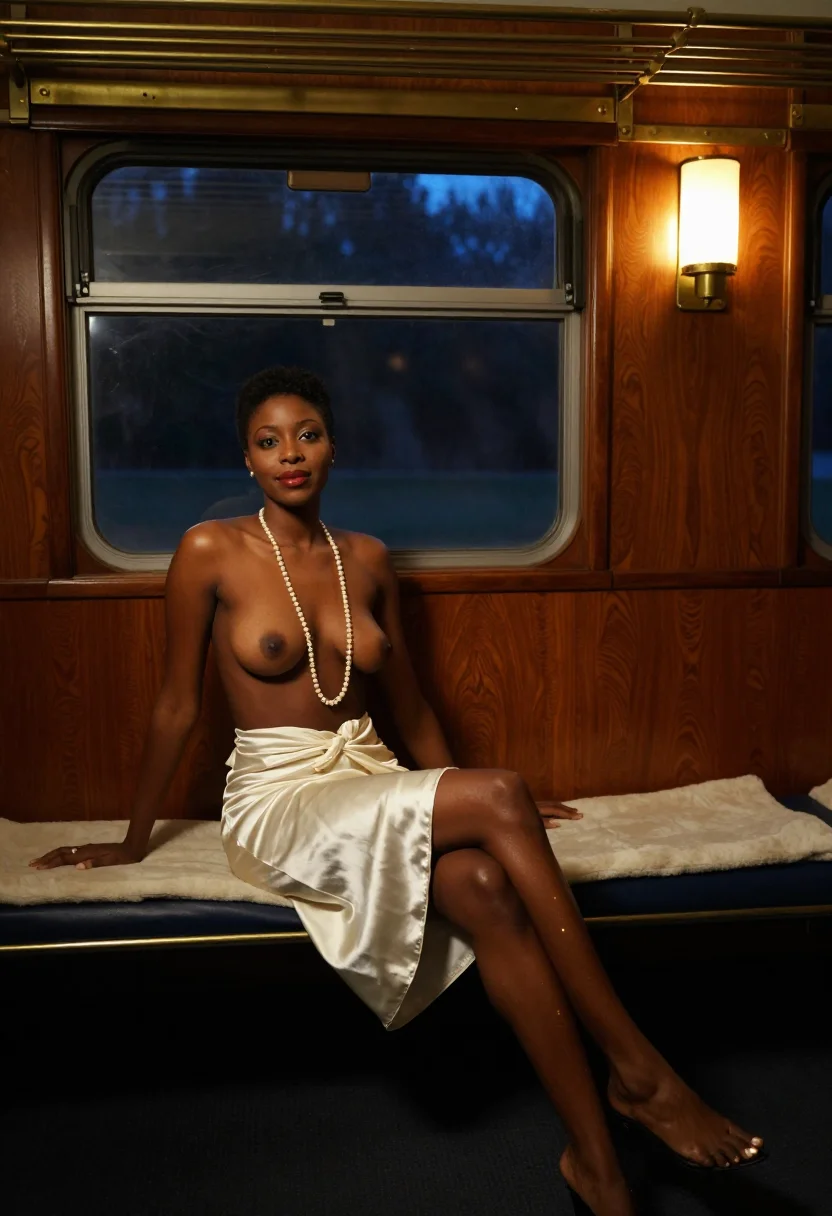
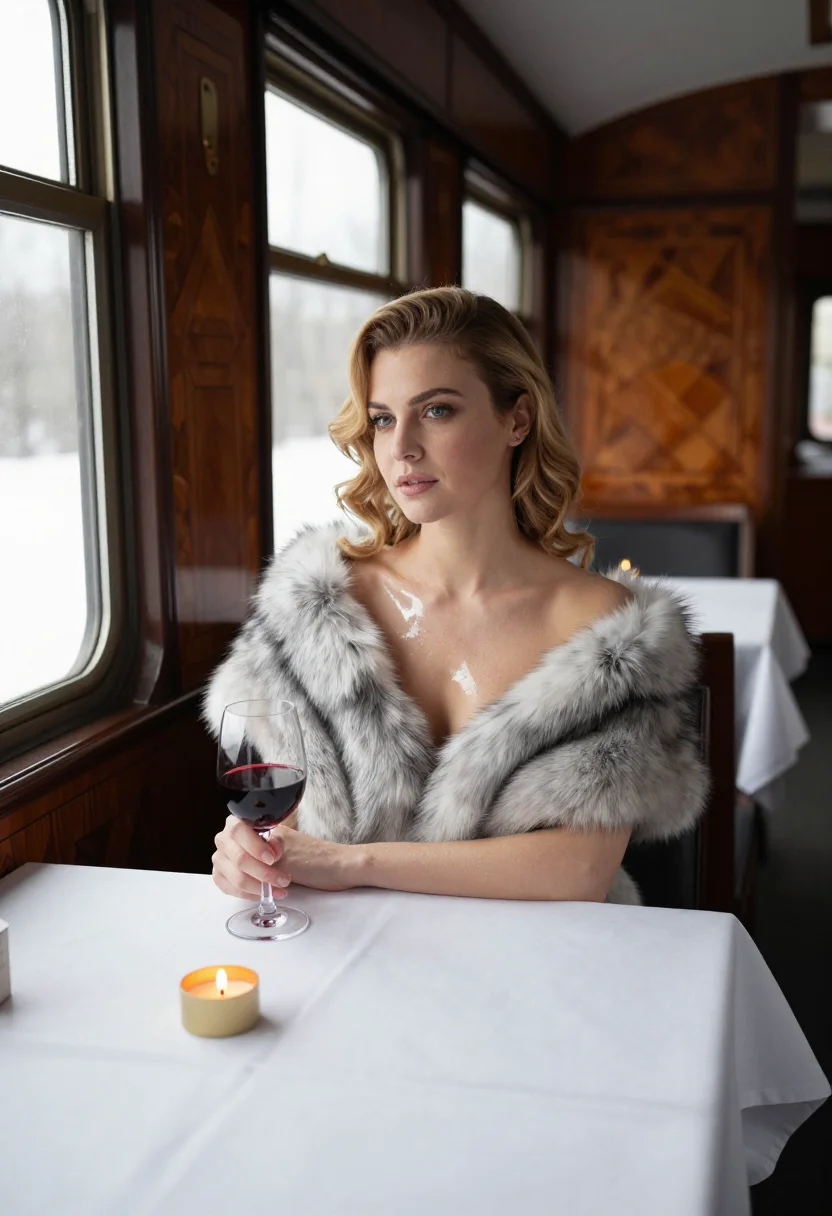
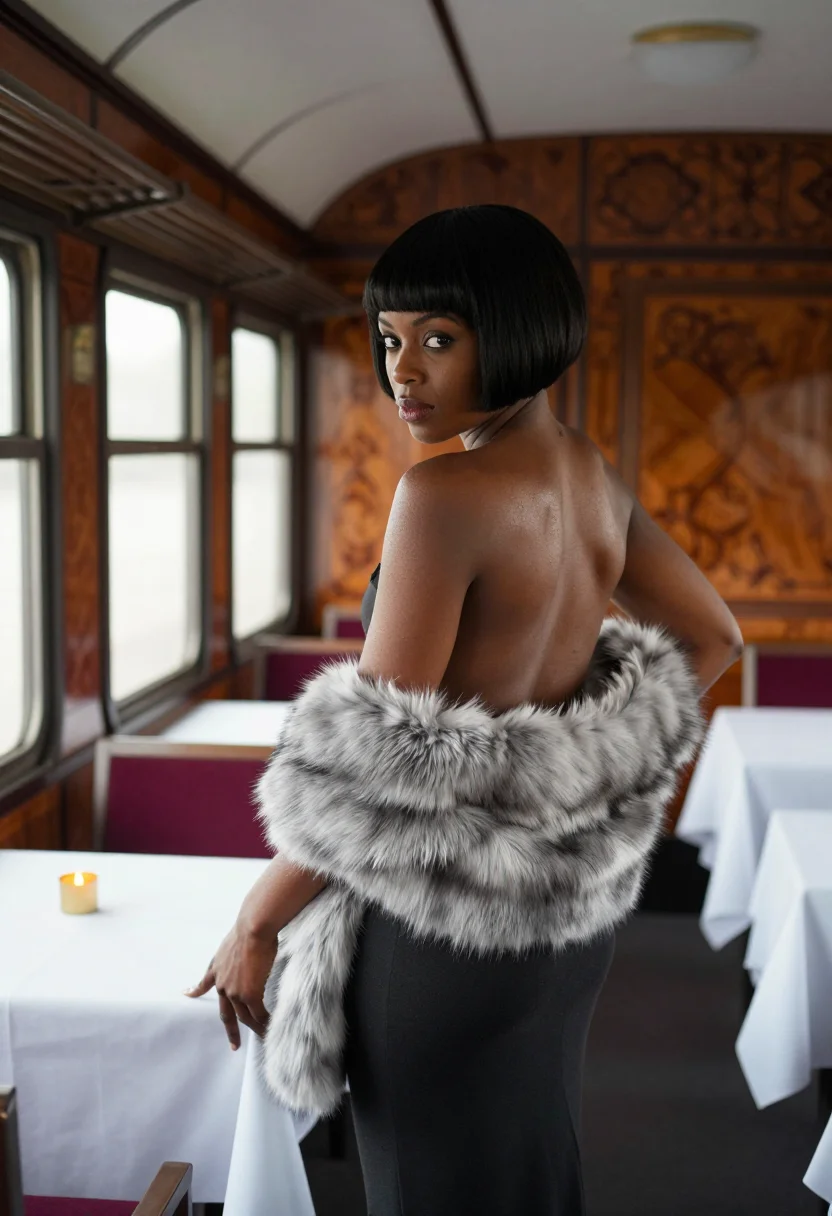
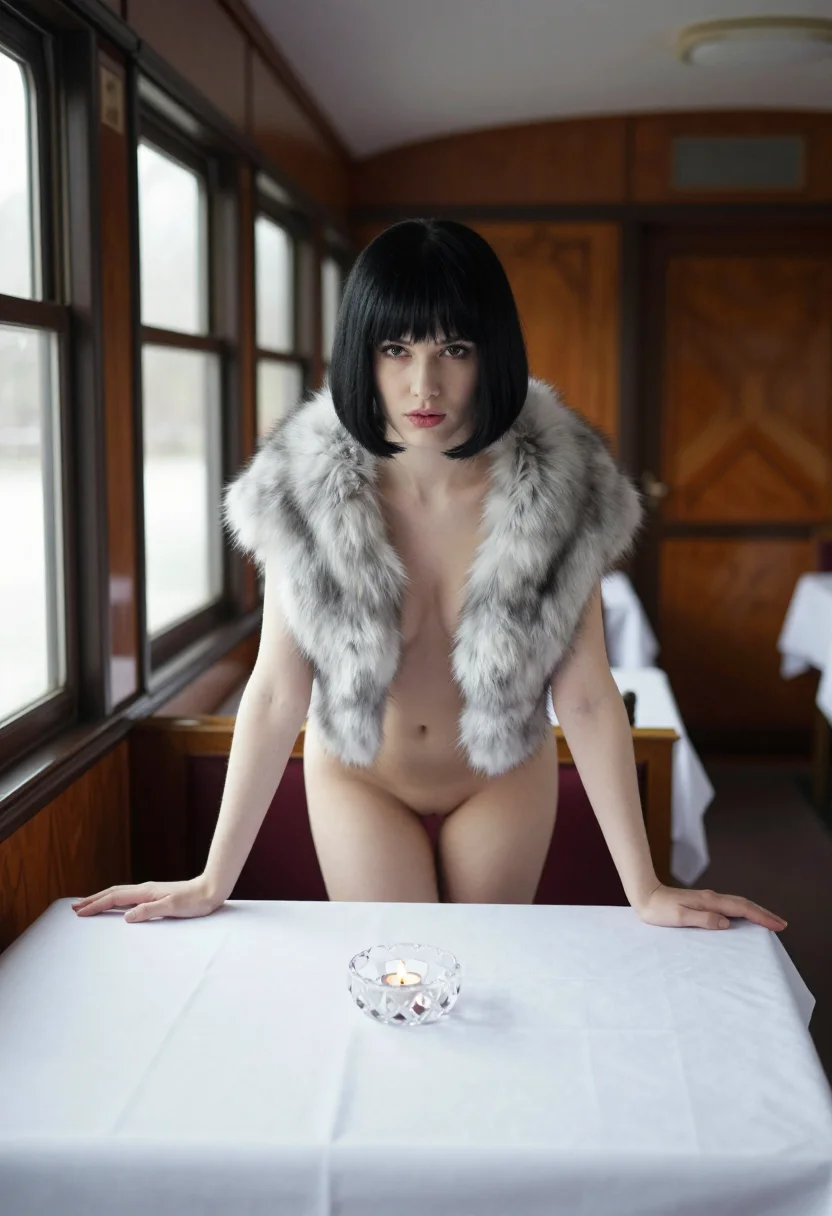
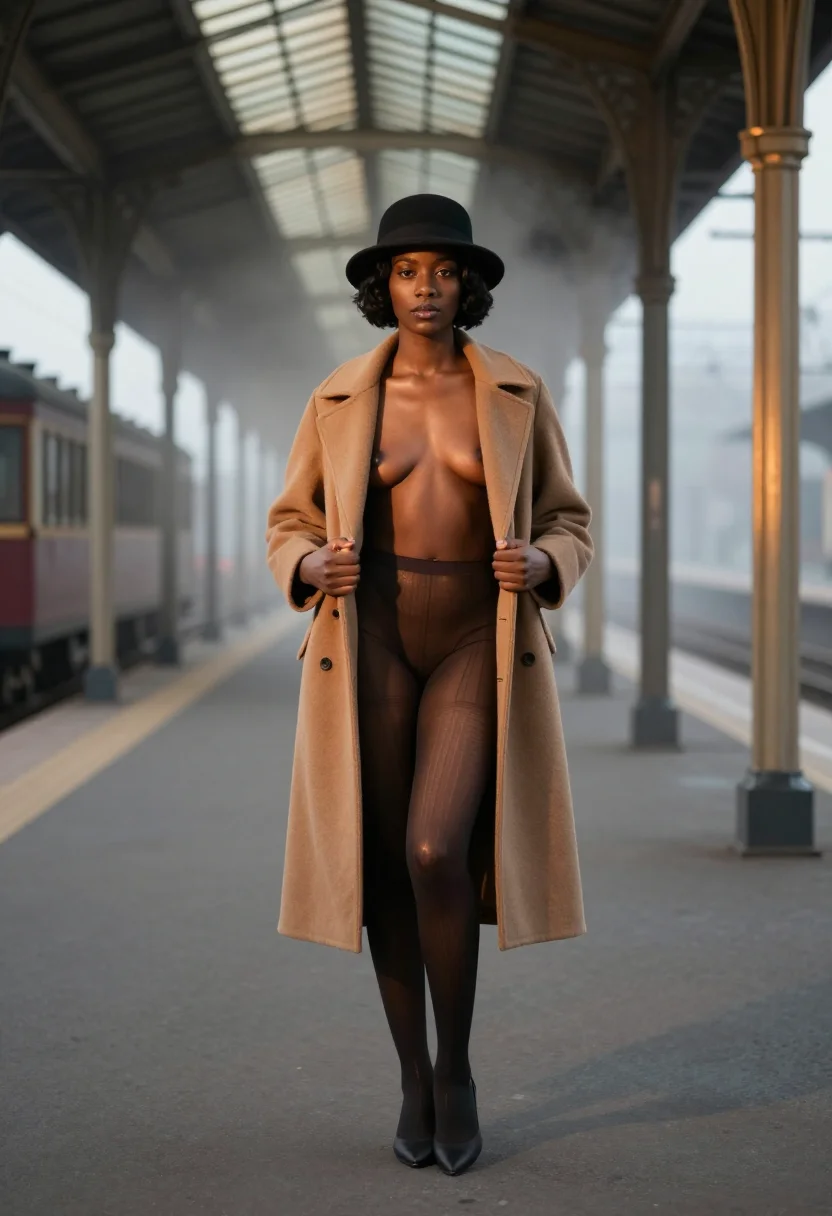
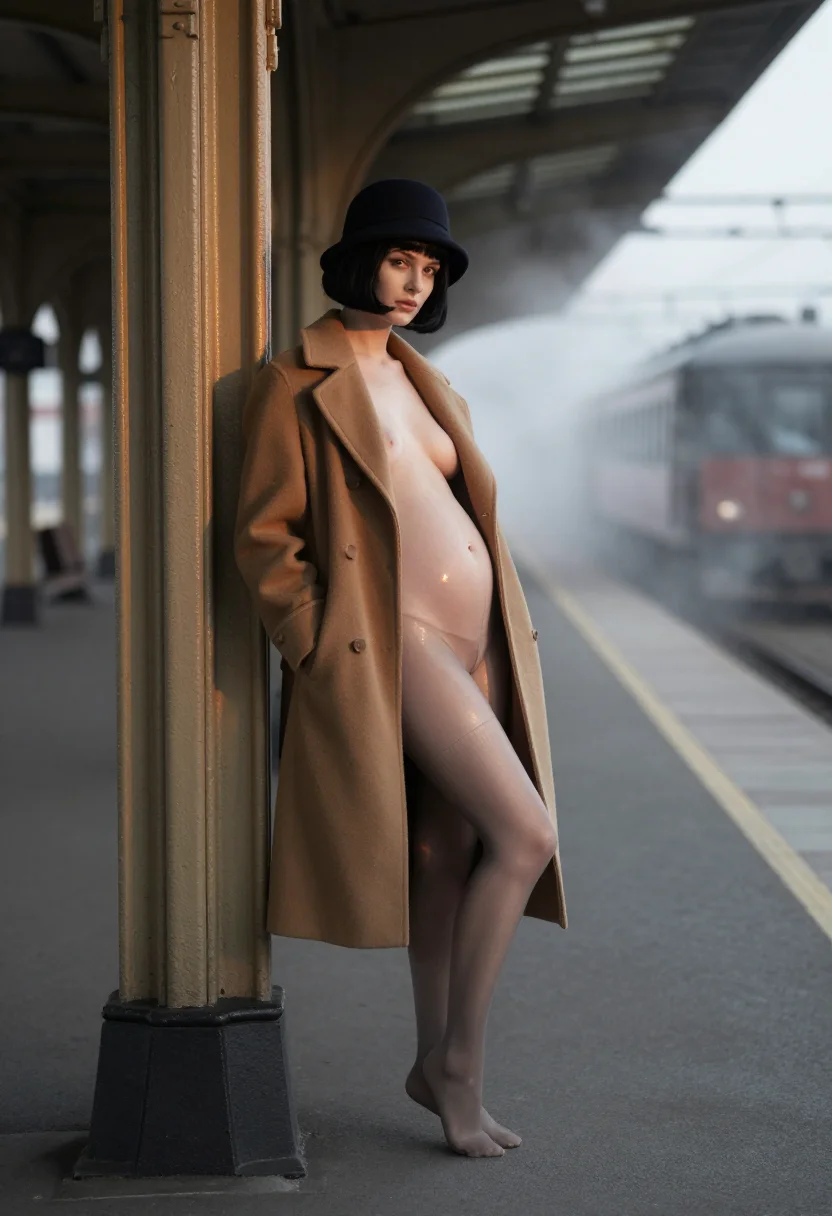
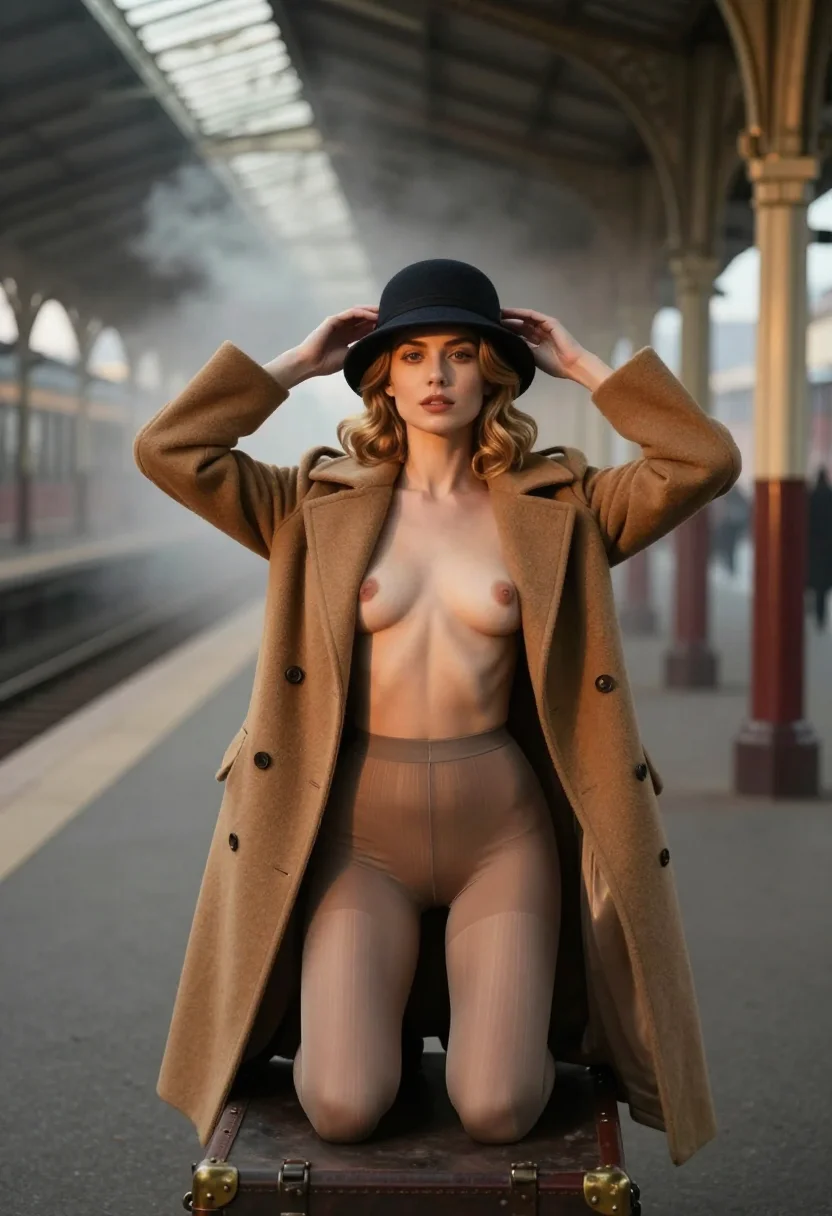
Three settings carry the sequence, each with its own light and its own hour. The sleeper compartment opens it at night: one brass sconce, small and close beside the berth, cutting a crisp edge down the spine and dying within a foot, walnut marquetry going to black in the corners, the window nothing but a cold blue-black smear where the country used to be. The dining car takes it into daylight at noon — a run of windows spreading broad cool light across starched white linen, warmed at the table by candle glow, a silver fox stole hanging open in two heavy panels, wine dark in cut crystal, the far end of the car receding into warm brown. The deco platform closes it at dawn: cold near-vertical light through a glazed roof, cut by warm ochre spill off the ironwork, steam drifting low and holding the beam, a heavy camel wool coat held open with both hands over seamed silk stockings, the porters cropped entirely out of frame. One wardrobe — oyster silk, pearls, fur, camel wool, seamed stockings — three lighting logics, one journey.
Search 'nudify', 'undress AI' or 'vintage train deepfake' and you reach tools built to strip real clothing off real photographs of real people. The vintage train deepfake and art deco nudify search ends here — composed from scratch, not stripped from anyone's photo. The dropped strap, the folded slip and the open coat are drafted into the composition from the first word, rather than extracted from an existing image.
All nine frames are photographic in composition and AI-generated in execution — the fast falloff of a small warm sconce, the flat matte behaviour of pearls under broad daylight, the way drifting steam holds a vertical beam — rendered from photographic principles, not drawn or animated. The house casts a range of muses across the register — a raven bob, honey-blonde waves, a finger-waved chanteuse — so what is fixed is the era and the palette, never a single body type.
Frequently asked questions
- What is in the AI Vintage Train Nudes pack?
- Nine frames of a jazz-age traveller across three settings: a first-class sleeper compartment at night, walnut marquetry and brass fittings with a bias-cut oyster silk slip dropped to the hips and a long rope of pearls kept on; a dining car at noon, white starched linen and inlaid panelling, a silver fox stole hanging open and red wine in cut crystal; and an art-deco station platform at dawn, steam drifting low between fluted steel columns, a heavy camel wool travel coat held open over seamed silk stockings and a cloche hat pulled low. Three frames per setting, €4.99.
- Is this a nudify or undress app? Can it strip a real photo?
- No. There is no undress function and no real photograph is processed. The slip is drafted already dropped, the coat drafted already open — the state of undress is composed into the frame from the first word of the prompt, not removed from an existing image.
- Are these real photographs or AI-generated?
- AI-generated, and photographic rather than illustrated. The light is built the way a period shoot would be: one small brass sconce close to the berth cutting a hard edge and dying within a foot, a run of dining-car windows spreading broad cool daylight over linen, an overhead glazed roof dropping near-vertical light through steam. Pearls take a row of tiny hot speculars; cut crystal throws a single hard point. It reads as film, not as a drawing.
- Is this the Orient Express?
- It is the register, not the trademark. The pack is built from the vocabulary of 1920s first-class rail travel — the wagon-lit berth, marquetry panelling, brass fittings, a dining car laid in starched linen, a glazed deco terminus — without depicting or naming any real company, livery or carriage. Nothing in the frames carries lettering of any kind.
- How is this different from the Second Empire pack?
- Sixty years and the whole silhouette. Second Empire is 1860s Paris: whalebone corsetry, a steel crinoline cage, a maid at the hooks — dress as engineering, photographed coming apart in candlelight. This pack is the 1920s, when that machinery was abandoned: a bias-cut silk slip that falls off the shoulders on its own, a bob, a rope of pearls, and a train moving at seventy miles an hour. Constraint versus motion.
- How is this different from the Film Noir pack?
- Two decades and a palette. Film Noir is 1940s Hollywood — hard monochrome, venetian-blind shadow, a femme fatale conceit. This one is jazz-age colour: brass gold against walnut brown and a blue-black window, silver-grey fur on linen white, camel wool in steam grey. The mood is travel and privacy rather than crime and threat.
- What are the three settings in this pack?
- Sleeper Compartment — night, walnut marquetry, a brass sconce close to the berth, the window a cold blue-black smear, the corners unlit. Dining Car — noon, a run of windows spreading cool daylight over white starched linen, warmed by candle glow on the table, the far end of the car receding into warm brown dark. Deco Platform — dawn, cold light falling near-vertical through a glazed roof, cut by warm ochre spill off the ironwork, steam holding the light and the platform depth dissolving into grey.
- Why do the pearls look like that?
- Because a small hard source close to the body is what pearls are for. The brass sconce in the sleeper frames is near and tiny, so each bead takes its own specular and the rope reads as a line of hot points across skin the light has just fallen off. The same rope under the dining car's broad daylight goes flat and matte — one prop, two entirely different behaviours, which is why it recurs in two settings.
- Do I need to upload a selfie?
- No — the pack renders without one. One optional selfie steers the muse's cast across all nine frames. No photo is undressed or manipulated; your upload informs the face direction only.
- Is this a Candy AI or Promptchan alternative?
- Adjacent territory, different format. Candy AI runs as an interactive chatbot and Promptchan as a per-prompt generator you steer yourself — period travel is exactly the register where prompt-by-prompt steering drifts, because the panelling, the fittings and the era have to agree in every frame. This pack is a pre-engineered nine-frame series: one wardrobe, three coordinated settings, three lighting logics, delivered as a single purchase.
- Can I use the frames once unlocked?
- Personal and creative use. Not for commercial redistribution, not to misrepresent as a real person's photograph, not for use against any individual.
- Is this explicit? Is there an age requirement, and is a real person depicted?
- Yes — adult nudity in a 1920s period-travel register. Access requires confirmation of age (18+), and every frame is AI-generated. No real person is named, depicted or impersonated: the muse is synthetic, someone who does not exist. The one exception is you — if you upload a selfie, you are choosing to cast your own face into the composed frames.
Who This Pack Is For
- Art-deco and jazz-age enthusiasts searching 1920s nude, art deco nude or period travel nude who want a specific era and setting rather than generic vintage imagery
- Costume and set designers studying the bias cut silk slip, a silver fox stole, seamed silk stockings and the cloche silhouette in one consistent series
- Artists and illustrators who need reference for a small hard warm source in a confined interior — crisp shadow edge, fast falloff, speculars strung along pearls
- Writers of interwar and rail-travel fiction who need a consistent visual face for a fictional traveller or a jazz age nude character study
- Photographers working out how a sleeper compartment boudoir or wagon lit boudoir set would be lit, and how a dining car photoshoot behaves under a run of windows
- Digital collage artists working in brass gold, walnut brown and steam grey who need photographic-quality material
- Adults curious about AI 1920s boudoir photoshoot work at an accessible entry price
About Ovid
Ovid is a house of pictures that were never taken. Most AI image tools ship one giant catalog of poses and aesthetics; the output looks like every other generated image on the internet. Ovid goes the other way. Each pack is a single editorial brief — light, styling, scene composed in the grammar of the great fashion editorials — hand-curated against real references and tested before it ships. Free preview before you pay. Packs are one-time. No template generator, no feed. A fashion house, not a catalog.
All images are AI-generated. By using this service, you confirm you are 18+. Full Terms